


Page 25 - IJAMD-2-2
P. 25
International Journal of AI for
            Materials and Design                                                  AI-driven material development for AM


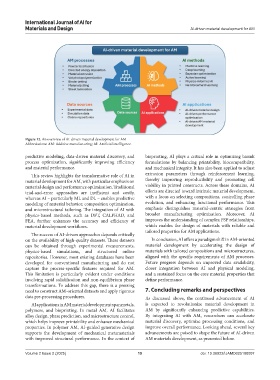
            Figure 12. An overview of AI-driven material development for AM
            Abbreviations: AM: Additive manufacturing; AI: Artificial intelligence.

            predictive modeling, data-driven material discovery, and   bioprinting, AI plays a critical role in optimizing bioink
            process optimization, significantly improving efficiency   formulations by balancing printability, biocompatibility,
            and material performance.                          and mechanical integrity. It has also been applied to adjust
              This review highlights the transformative role of AI in   extrusion parameters through reinforcement learning,
            material development for AM, with particular emphasis on   thereby improving reproducibility and promoting cell
            material design and performance optimization. Traditional   viability in printed constructs. Across these domains, AI
            trial-and-error approaches are inefficient and costly,   efforts are directed toward intrinsic material development,
            whereas AI – particularly ML and DL – enables predictive   with a focus on selecting compositions, controlling phase
            modeling of material behavior, composition optimization,   evolution, and enhancing functional performance. This
            and microstructural tailoring. The integration of AI with   emphasis distinguishes material-centric strategies from
            physics-based methods, such as DFT, CALPHAD, and   broader manufacturing optimization. Moreover, AI
            FEA, further enhances the accuracy and efficiency of   improves the understanding of complex PSP relationships,
            material development workflows.                    which enables the design of materials with reliable and
                                                               tailored properties for AM applications.
              The success of AI-driven approaches depends critically
            on the availability of high-quality datasets. These datasets   In conclusion, AI offers a paradigm shift in AM-oriented
            can be obtained through experimental measurements,   material development by accelerating the design of
            physics-based simulations, and structured online   materials with tailored compositions and microstructures,
            repositories. However, most existing databases have been   aligned with the specific requirements of AM processes.
            developed for conventional manufacturing and do not   Future progress depends on improved data availability,
            capture the process-specific features required for AM.   closer integration between AI and physical modeling,
            This limitation is particularly evident under conditions   and a sustained focus on the core material properties that
            involving rapid solidification and non-equilibrium phase   define performance.
            transformations.  To address  this  gap,  there  is  a pressing
            need to construct AM-oriented datasets and apply rigorous   7. Concluding remarks and perspectives
            data pre-processing procedures.                    As discussed above, the continued advancement of AI
              AI applications in AM material development span metals,   is  expected to  revolutionize  material development in
            polymers, and bioprinting. In metal AM, AI facilitates   AM by significantly enhancing predictive capabilities.
            alloy design, phase prediction, and microstructure control,   By  integrating  AI  with  AM,  researchers  can  accelerate
            which helps improve printability and enhance mechanical   material discovery, optimize processing conditions, and
            properties. In polymer AM, AI-guided generative design   improve overall performance. Looking ahead, several key
            supports  the  development  of  mechanical  metamaterials   advancements are poised to shape the future of AI-driven
            with improved structural performance. In the context of   AM materials development, as presented below.


            Volume 2 Issue 2 (2025)                         19                        doi: 10.36922/IJAMD025100007

