


Page 17 - IJAMD-2-2
P. 17
International Journal of AI for
            Materials and Design                                                  AI-driven material development for AM


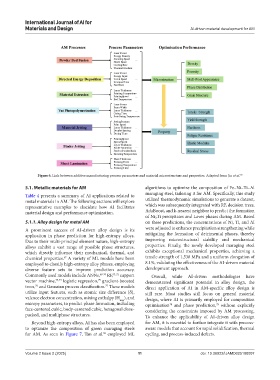
                 Figure 6. Link between additive manufacturing process parameters and material microstructure and properties. Adapted from Jin et al. 10

            5.1. Metallic materials for AM                     algorithms to optimize the composition of Fe–Ni–Ti–Al
            Table 4 presents a summary of AI applications related to   maraging steel, tailoring it for AM. Specifically, this study
            metal materials in AM. The following sections will explore   utilized thermodynamic simulations to generate a dataset,
            representative examples to elucidate how AI facilitates   which was subsequently integrated with RF, decision trees,
            material design and performance optimization.      AdaBoost, and k-nearest neighbor to predict the formation
                                                               of Ni₃Ti precipitates and Laves phases during AM. Based
            5.1.1. Alloy design for metal AM                   on these predictions, the concentrations of Ni, Ti, and Al
            A prominent success of AI-driven alloy design is its   were adjusted to enhance precipitation strengthening while
            application in  phase  prediction  for  high-entropy  alloys.   mitigating the formation of detrimental phases, thereby
            Due to their multi-principal element nature, high-entropy   improving  microstructural stability and mechanical
            alloys  exhibit  a  vast range of  possible  phase  structures,   properties. Finally, the newly developed maraging steel
            which directly influence their mechanical, thermal, and   exhibits exceptional mechanical properties, achieving a
            chemical properties.  A variety of ML models have been   tensile strength of 1,538 MPa and a uniform elongation of
                            67
            employed to classify high-entropy alloy phases, employing   8.1%, validating the effectiveness of the AI-driven material
            diverse feature sets to improve prediction accuracy.   development approach.
            Commonly used models include ANNs, 68-70  RF, 71,72  support   Overall, while AI-driven methodologies have
            vector machine, 73,74  logistic regression,  gradient-boosted   demonstrated significant potential in alloy design, the
                                           75
            trees,  and Gaussian process classification.  These models   direct application of AI in AM-specific alloy design is
                                              77
                76
            utilize input features, such as atomic size difference (δ),   still rare. Most studies still focus on general material
            valence electron concentration, mixing enthalpy (H ), and   design, where AI is primarily employed for composition
                                                    mix
            entropy parameters, to predict phase formation, including   optimization  and phase prediction,  without explicitly
                                                                         78
                                                                                             79
            face-centered cubic, body-centered cubic, hexagonal close-  considering the constraints imposed by AM processing.
            packed, and multiphase structures.                 To enhance the applicability of AI-driven alloy design
              Beyond high-entropy alloys, AI has also been employed   for AM, it is essential to further integrate it with process-
            to optimize the composition of green maraging steels   aware models that account for rapid solidification, thermal
            for AM. As seen in  Figure  7, Tan  et al.  employed ML   cycling, and process-induced defects.
                                             58

            Volume 2 Issue 2 (2025)                         11                        doi: 10.36922/IJAMD025100007

