


Page 61 - IJAMD-2-3
P. 61
International Journal of AI for
            Materials and Design                                                Intelligent interactive textile in healthcare


            process (Figure S2). The combination of beige, redwood,   the camera captures the hand image, and the deep learning
            and blue-grey was selected by stakeholders and is shown   model identifies 21 corresponding landmark points. These
            in Figure 2C. Using this palette, three knitted fabric wall   landmarks – represented by their (x, y) coordinates – are
            panels were fabricated and subsequently installed at the   analyzed by the self-developed algorithm, which identifies
            WTSDHC, as shown in Figure 2D.                     the gesture as “good” based on the relative positions and
                                                               angles between landmark points. This classification is
            4.2. Integration of illuminative fabrics into an   processed using simple state machine logic and converted
            AI-based system                                    into encoded serial data. The data are transmitted to the
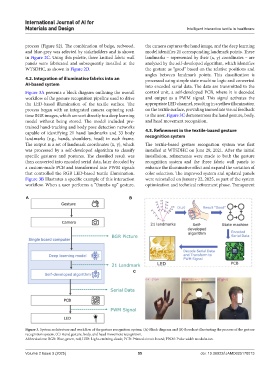
            Figure 3A presents a block diagram outlining the overall   control unit, a self-developed PCB, where it is decoded
            workflow of the gesture recognition pipeline used to drive   and  output  as  a  PWM  signal.  This  signal  activates  the
            the LED-based illumination of the textile surface. The   appropriate LED channel, resulting in a yellow illumination
            process began with an integrated camera capturing real-  on the textile surface, providing immediate visual feedback
            time BGR images, which are sent directly to a deep learning   to the user. Figure 3C demonstrates the hand gesture, body,
            model without being stored. The model included pre-  and head movement recognition.
            trained hand-tracking and body pose detection networks
            capable of identifying 21 hand landmarks and 33 body   4.3. Refinement in the textile-based gesture
            landmarks (e.g., hands, shoulders, head) in each frame.   recognition system
            The output is a set of landmark coordinates (x, y), which   The textile-based gesture recognition system was first
            was processed by a self-developed algorithm to classify   installed at WTSDHC on June 29, 2021. After the initial
            specific gestures and postures. The classified result was   installation, refinements were made to both the gesture
            then converted into encoded serial data, later decoded by   recognition  system  and the  three  fabric  wall  panels  to
            a custom-made PCB and transformed into PWM signals   enhance the illuminative effect and expand the variation of
            that controlled the RGB LED-based textile illumination.   color selection. The improved system and updated panels
            Figure 3B illustrates a specific example of this interaction   were reinstalled on January 22, 2025, as part of the system
            workflow. When a user performs a “thumbs up” gesture,   optimization and technical refinement phase. Transparent


            A                                           B


                                                          C


            Figure 3. System architecture and workflow of the gesture recognition system. (A) Block diagram and (B) flowchart illustrating the process of the gesture
            recognition system. (C) Hand gesture, body, and head movement recognition.
            Abbreviations: BGR: Blue, green, red; LED: Light-emitting diode; PCB: Printed circuit board; PWM: Pulse width modulation.


            Volume 2 Issue 3 (2025)                         55                        doi: 10.36922/IJAMD025170013

