


Page 101 - IJB-10-1
P. 101
International Journal of Bioprinting                                3D bioprinting for musculoskeletal system


            the types of mature and functional cells that are typically   engineer a 3D diseased skin tissue with pathophysiological
            present in adult organs remains unknown. Therefore, it   characteristics of type II diabetes in vitro and validated its
            is necessary to develop powerful methods to differentiate   feasibility as a drug screening tool.  Bin et al. developed
                                                                                           188
            PSCs and promote their maturation. The process of stem   bioinks composed of scar dECM and alginate–gelatin (Alg–
            cell differentiation in the body is highly sophisticated and   Gel) hydrogels with desired mechanical properties to mimic
            it is difficult to recapitulate all the cues in vitro. Besides, the   the native architecture and microenvironmental factors
            combination of physicochemical factors required to induce   of human hypertrophic scar (HHS).  The bioprinted
                                                                                              189
            differentiation of human PSCs into specific lineages remains   HHS model demonstrated hallmarks of early-stage HHS
            unknown.  Thus, the interaction between cells and ECM   and suitability for rapid drug testing. Since solid tumors
                    184
            is another important factor affecting the construction   possess complex  and  heterogeneous  structures based on
            of  in vitro  models. ECM biomimetic materials such as   various cell types and ECM, 3D-bioprinted tumor models
            Matrigel are popular options for building in vitro models.   are potential tools for advancing our understanding of
            Matrigel is purified extract derived from ECM-producing   cancer biology and mechanism of therapeutics. 190,191  Han
            tumors that provide both structural support and growth   et al. bioprinted in vitro breast cancer models, which can
            factors necessary for cell growth and differentiation.   accurately recapitulate the pathological micromorphology
            Despite practical properties such as cell adhesion and   of heterogeneous cancer tissues and trigger drug responses
            biodegradability,  animal-derived materials are limited   similar to those of  human  cancers.   Neufeld  et al.
                                                                                              192
            by poor mechanical properties and batch differences. In   developed fibrin glioblastoma bioinks for the bioprinting
            addition to the material itself, material design is also an   of a glioblastoma model.  The bioprinted glioblastoma
                                                                                    193
            important part of  in vitro model system construction.    model contains complex blood vessels through which
                                                         185
            For example, in order to accurately guide stem cell   blood cells and drugs can be administered, achieving a
            differentiation, a series of biocompatible materials such as   faithful simulation of the tumor. Hakobyan et al. described
            multifunctional hydrogels were designed to simulate the   the fabrication of exocrine pancreas spheroid models
            mechanical strength and 3D biological structure of bone.    using laser-assisted bioprinting approach, which closely
                                                         186
            These hydrogels are promising candidates for bioinks due   resembled the initial stages and progression of pancreatic
            to their unique high water content structure and adjustable   ductal adenocarcinoma.  These bioprinted tumor models
                                                                                  194
            physicochemical properties.                        offer an opportunity to produce high-throughput drug
               3D bioprinting offers a powerful tool for the creation of   testing platforms and mimic patient-specific drug reaction
            a variety of in vitro disease models due to its high precision,   for individualized anticancer therapies. 195
            resolution,  reproducibility, and capability to  scale  up   Recently, 3D-bioprinted constructs  have been
            scaffold production.  Kim et al. used 3D bioprinting to   increasingly investigated as  in  vitro disease models for
                            187
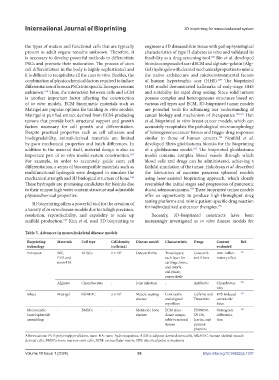
            Table 5. Advances in musculoskeletal disease models

             Bioprinting   Materials  Cell type  Cell density   Disease model  Characteristic  Drugs  Content   Ref.
             technology                         (cells/mL)                                   evaluated
             Extrusion   Silk,      ADSCs       1 × 10 7   Osteoarthritis  Three layers;   Celecoxib   Anti-inflam-  195
                         PVP, and                                      each layer for   and Rhein  matory effect
                         nano-HA                                       cartilage, bone,
                                                                       and interfa-
                                                                       cial phase,
                                                                       respectively
                         Alginate   Chondrocytes  -        Joint infection  -       Antibiotic  Chondrotox-  198
                                                                                             icity
             Inkjet      Matrigel   hSkMDC      2 × 10 7   Muscle wasting   Contractile   Caffeine and  EPS-induced   197
                                                           disease     and aligned   Tirasemtiv  contractile
                                                                       myofibers             force
             Microneedle-   -       BMSCs       -          Metabolic bone   ECM abun-  PD98059,   Osteogenic   192
             based spheroid                                disease     dance compa-  U0126,   differentia-
             assembling                                                rable to natural   Icariin, and   tion
                                                                       tissues      purmor-
                                                                                    phamine
            Abbreviations: PVP: polyvinylpyrrolidone, nano-HA: nano-hydroxyapatites, ADSCs: adipose-derived stem cells, hSkMDC: human skeletal muscle-
            derived cells, BMSCs: bone marrow stem cells, ECM: extracellular matrix, EPS: electrical pulse stimulation

            Volume 10 Issue 1 (2024)                        93                          https://doi.org/10.36922/ijb.1037

