


Page 84 - IJB-2-2
P. 84
Structural, mechanical and in vitro studies on pulsed laser deposition of hydroxyapatite on additive manufactured polyamide substrate


                    (A)                                             (B)


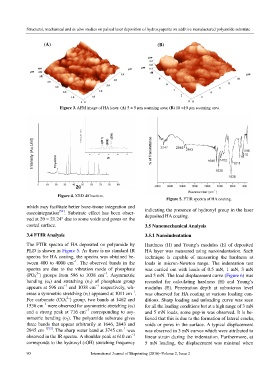
                           Figure 3. AFM image of HA layer. (A) 5 × 5 µm scanning area; (B) 10 ×10 µm scanning area.


                          Figure 4. XRD diffraction.
                                                                        Figure 5. FTIR spectra of HA coating.
            which may facilitate better bone-tissue integration and
            osseointegration [52] .  Substrate effect  has been obser-  indicating the presence of hydroxyl group in the laser
            ved at 2θ = 21.24° due to some voids and pores on the   deposited HA coating.
            coated surface.                                    3.5 Nanomechanical Analysis

            3.4 FTIR Analysis                                  3.5.1 Nanoindentation
            The FTIR spectra of HA deposited on polyamide by   Hardness (H) and Young’s modulus (E) of deposited
            PLD is shown in Figure 5. As there is no standard IR   HA layer was measured using nanoindentation. Such
            spectra for HA coating, the spectra was obtained be-  technique is capable of  measuring  the  hardness at
                                –1
            tween 400 to  4000  cm . The observed  bands in the   loads  in micron-Newton range. The indentation test
            spectra are  due  to the vibration  mode  of phosphate   was carried out with loads of 0.5  mN, 1 mN, 3 mN
                3–
                                             –1
            (PO 4 ) groups  from  596 to 1038 cm . Asymmetric   and 5 mN. The load displacement curve (Figure 6) was
            bending (ʋ 4)  and stretching (ʋ 3) of phosphate  group   recorded  for calculating  hardness (H)  and  Young’s
                            –1
                                          –1
            appears at 596 cm  and 1038 cm  respectively, wh-  modulus (E).  Penetration  depth at submicron level
                                                         –1
            ereas a symmetric stretching (ʋ 1) appeared at 1011 cm .   was observed for HA coating at various loading con-
                             2–
            For carbonate (CO 3 ) group, two bands at 1462 and   ditions. Sharp loading and unloading curve was seen
                   –1
            1536 cm  were observed for asymmetric stretching (ʋ 3)   for all the loading conditions but at a high range of 3 mN
                                     –1
            and a strong peak at 716 cm  corresponding to asy-  and 5 mN loads, some pop-in was observed. It is be-
            mmetric bending (ʋ 2). The polyamide substrate gives   lieved that this is due to the formation of lateral cracks,
            three bands that appear arbitrarily at 1646, 2843 and   voids or pores in the surface. A typical displacement
                                                     –1
            2945 cm –1[53] . The sharp water band at 3745 cm  was   was observed in 3 mN curves which were attributed to
                                                         –1
            observed in the IR spectra. A shoulder peak at 610 cm    linear strain during the indentation. Furthermore, at
            corresponds to the hydroxyl (-OH) stretching frequency     5  mN  loading,  the displacement was  minimal  when
            90                          International Journal of Bioprinting (2016)–Volume 2, Issue 2

