


Page 86 - IJB-2-2
P. 86
Structural, mechanical and in vitro studies on pulsed laser deposition of hydroxyapatite on additive manufactured polyamide substrate


                                                                    http://dx.doi.org/10.1016/S0021-9290(06)83793-0
                                                                6.   Asri R I, Harun W S, Hassan M A, et al., 2016, A review
                                                                    of hydroxyapatite-based coating techniques: sol–gel and
                                                                    electrochemical depositions on biocompatible metals.
                                                                    Journal of the Mechanical Behavior of Biomedical Ma-
                                                                    terials, vol.57: 95–108.
                                                                    http://dx.doi.org/10.1016/j.jmbbm.2015.11.031
                                                                7.   Nishikawa H, Hasegawa T, Miyake A, et al., 2016, Re-
                                                                    lationship between the Ca/P ratio of hydroxyapatite thin
                                                                    films and the spatial energy distribution of the ablation
                                                                    laser in pulsed laser deposition. Materials Letters, vol.165:
                                                                    95–98.

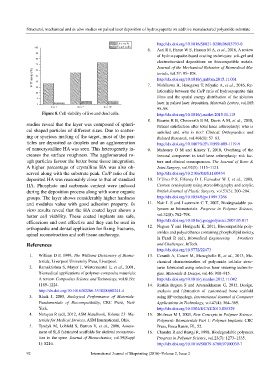
                   Figure 8. Cell viability of live and dead cells.   http://dx.doi.org/10.1016/j.matlet.2015.11.115
                                                                8.   Bourne R B, Chesworth B M, Davis A M, et al., 2010,
            studies reveal that the layer was composed of spheri-   Patient satisfaction after total knee arthroplasty: who is
            cal shaped particles of different sizes. Due to scatter-  satisfied  and who is not?  Clinical Orthopaedics and
            ing or spurious melting of the target, most of the par-  Related Research, vol.468(1): 57–63.
            ticles are deposited as droplets and an agglomeration   http://dx.doi.org/10.1007%2Fs11999-009-1119-9
            of nanocrystalline HA was seen. This heterogeneity in-  9.   Mahoney O M  and Kinsey  T,  2010, Overhang of the
            creases  the surface roughness. The agglomerated ro-    femoral component in total knee arthroplasty: risk fac-
            ugh particles favour the better bone tissue integration.   tors and clinical consequences. The Journal of Bone &
            A higher  percentage of  crystalline HA was also ob-    Joint Surgery, vol.92(5): 1115–1121.
            served along with the substrate peak. Ca/P ratio of the   http://dx.doi.org/10.2106/JBJS.H.00434
            deposited HA was reasonably close to that of standard   10.  D’Urso P S, Effeney D J, Earwaker W J, et al., 2000,
            HA. Phosphate and  carbonate  content were induced      Custom cranioplasty using stereolithography and acrylic.
            during the deposition process along with some organic   British Journal of Plastic Surgery, vol.53(3): 200–204.
            groups. The layer shows considerably higher hardness    http://dx.doi.org/10.1054/bjps.1999.3268
            and  modulus value  with  good adhesion property.  In   11.  Nair L S and Laurencin C T, 2007, Biodegradable po-
            vitro results reveal that the HA coated layer shows a   lymers as  biomaterials.  Progress  in  Polymer  Science,
            better cell viability.  These  coated implants are  safe,   vol.32(8): 762–798.
            efficacious and cost effective and they can be used in   http://dx.doi.org/10.1016/j.progpolymsci.2007.05.017
            orthopaedic and dental application for fixing fractures,   12.  Nagase Y and Horiguchi K, 2011, Biocompatible poly-
            spinal reconstruction and soft tissue anchorage.        amides and polyurethanes containing phospholipid moiety,
                                                                    in  Fazel R (ed),  Biomedical  Engineering  —  Frontiers
            References                                              and Challenges, InTech.
                                                                    http://dx.doi.org/10.5772/22473
              1.   William D F, 1999, The Williams Dictionary of Bioma-  13.  Cerardi A, Caneri M, Meneghello R, et al., 2013, Me-
                 terials, Liverpool University Press, Liverpool.    chanical characterization of  polyamide cellular struc-
              2.   Ramakrishna S, Mayer J, Wintermantel E, et al., 2001,   tures fabricated using selective laser sintering technolo-
                 Biomedical applications of polymer-composite materials:   gies. Materials & Design, vol.46: 910–915.
                 A review. Composites Science and Technology, vol.61(9):   http://dx.doi.org/10.1016/j.matdes.2012.11.042
                 1189–1224.                                     14.  Rashia Begum  S and Arumaikkannu G, 2013, Design,
                 http://dx.doi.org/10.1016/S0266-3538(00)00241-4    analysis  and fabrication of  customised bone scaffold
              3.   Black J, 2005,  Biological  Performance of  Materials:   using RP technology. International Journal of Computer
                 Fundamentals of  Biocompatibility, CRC Press, New   Applications in Technology, vol.47(4): 364–369.
                 York.                                              http://dx.doi.org/10.1504/IJCAT.2013.055329
              4.   Narayan R (ed), 2012, ASM Handbook, Volume 23: Ma-  15.  Shtilman M I, 2003, New Concepts in Polymer Science.
                 terials for Medical Devices, ASM International, Ohio.     Polymeric Biomaterials Part 1: Polymer Implants. CRC
              5.   Tyndyk  M, Lohfeld  S, Barron  V,  et al.,  2006,  Assess-  Press, Boca Raton, FL, 52.
                 ment of SLS fabricated scaffolds for skeletal reconstruc-  16.  Chandra R and Rustgi R, 1998, Biodegradable polymers.
                 tion in the spine. Journal of Biomechanics, vol.39(Suppl   Progress in Polymer Science, vol.23(7): 1273–1335.
                 1): S216.                                          http://dx.doi.org/10.1016/S0079-6700(97)00039-7

            92                          International Journal of Bioprinting (2016)–Volume 2, Issue 2

