


Page 493 - IJB-10-2
P. 493
International Journal of Bioprinting                                Bioprinted skin for testing of therapeutics


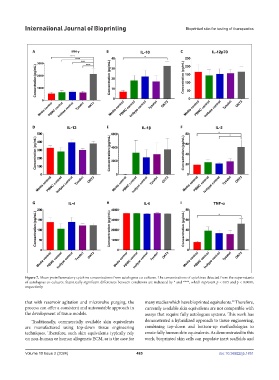
            Figure 7. Mean proinflammatory cytokine concentrations from autologous co-cultures. The concentrations of cytokines detected from the supernatants
            of autologous co-cultures. Statistically significant differences between conditions are indicated by * and ****, which represent p < 0.05 and p < 0.0001,
            respectively.

            that with reservoir agitation and microvalve purging, the   many studies which have bioprinted equivalents.  Therefore,
                                                                                                    38
            process can offer a consistent and automatable approach in   currently available skin equivalents are not compatible with
            the development of tissue models.                  assays that require fully autologous systems. This work has

               Traditionally, commercially available skin equivalents   demonstrated a hybridized approach to tissue engineering,
            are manufactured using top-down tissue engineering   combining top-down and bottom-up methodologies to
            techniques. Therefore, such skin equivalents typically rely   create fully human skin equivalents. As demonstrated in this
            on non-human or human allogeneic ECM, as is the case for   work, bioprinted skin cells can populate inert scaffolds and


            Volume 10 Issue 2 (2024)                       485                                doi: 10.36922/ijb.1851

