


Page 520 - IJB-10-6
P. 520
International Journal of Bioprinting                              Redefined collagen inks in cartilage printing


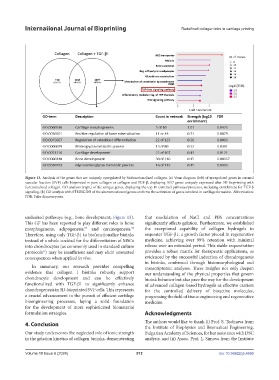
            Figure 13. Analysis of the genes that are uniquely upregulated by biofunctionalized collagen. (a) Venn diagram (left) of upregulated genes in stromal
            vascular fraction (SVF) cells bioprinted in pure collagen or collagen and TGF-β, displaying 1057 genes uniquely expressed after 3D bioprinting with
            functionalized collagen. GO analysis (right) of the unique genes, displaying the top 10 enriched pathways/processes, including enrichment for TGF-β
            signaling. (b) GO analysis with STRING DB of the abovementioned genes confirms the activation of genes involved in cartilage formation. Abbreviation:
            FDR: False discovery rate.


            undesired pathways (e.g., bone development; Figure 13).   that modulation of NaCl and PBS concentrations
            This GF has been reported to play different roles in bone   significantly affects gelation. Furthermore, we established
            morphogenesis, adipogenesis,  and carcinogenesis.    the  exceptional capability  of  collagen  hydrogels  to
                                                         56
                                     55
            Therefore, using only TGF-β1 to biofunctionalize bioinks   sequester TGF-β1, a growth factor pivotal in regenerative
            instead of a whole cocktail for the differentiation of MSCs   medicine, achieving over 99% retention with minimal
            into chondrocytes (as commonly used in standard culture   release over an extended period. This stable sequestration
            protocols ) may be insufficient and may elicit unwanted   provides a robust matrix for therapeutic applications, as
                   57
            consequences when applied in vivo.                 evidenced by the successful induction of chondrogenesis
                                                               in bioinks, confirmed through histomorphological and
               In summary, our research provides compelling    transcriptomic analyses. These insights not only deepen
            evidence  that  collagen I  bioinks  robustly  support   our understanding of the physical properties that govern
            chondrocyte development and can be effectively     bioink behavior but also pave the way for the development
            functionalized with TGF-β1 to significantly enhance   of advanced collagen-based hydrogels as effective carriers
            chondrogenesis in 3D-bioprinted SVF cells. This represents   for the controlled delivery of bioactive molecules,
            a crucial advancement in the pursuit of efficient cartilage   progressing the field of tissue engineering and regenerative
            bioengineering  processes,  laying  a  solid  foundation   medicine.
            for the development of more sophisticated biomaterial
            formulation strategies.                            Acknowledgments

            4. Conclusion                                      The authors would like to thank (i) Prof. S. Todinova from
                                                               the  Institute  of Biophysics  and Biomedical  Engineering,
            Our study underscores the neglected role of ionic strength   Bulgarian Academy of Sciences, for her assistance with DSC
            in the gelation kinetics of collagen bioinks, demonstrating   analysis, and (ii) Assoc. Prof. L. Simova from the Institute


            Volume 10 Issue 6 (2024)                       512                                doi: 10.36922/ijb.4566

