


Page 59 - IJB-10-6
P. 59
International Journal of Bioprinting                               Semi-solid extrusion for pediatric medicine


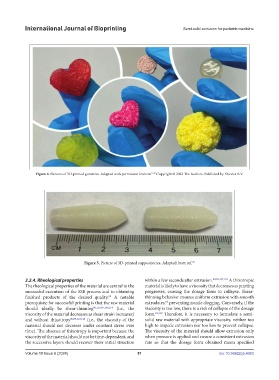
                Figure 4. Pictures of 3D-printed gummies. Adapted with permission from ref.  Copyright © 2023 The Authors. Published by Elsevier B.V.
                                                                  100


                                     Figure 5. Picture of 3D-printed suppositories. Adapted from ref. 85


            2.2.4. Rheological properties                      within a few seconds after extrusion. 80,85,127,128  A thixotropic
            The rheological properties of the material are central to the   material is likely to have a viscosity that decreases as printing
            successful execution of the SSE process and to obtaining   progresses, causing the dosage form to collapse. Shear-
            finished products of the desired quality.  A notable   thinning behavior ensures uniform extrusion with smooth
                                               80
                                                                        85
            prerequisite for successful printing is that the raw material   extrudates,  preventing nozzle clogging. Conversely, if the
            should ideally be shear-thinning 80,110,85,108,118  (i.e., the   viscosity is too low, there is a risk of collapse of the dosage
            viscosity of the material decreases as shear strain increases)   form. 81,118  Therefore, it is necessary to formulate a semi-
            and without thixotropy 80,85,127,128  (i.e., the viscosity of the   solid raw material with appropriate viscosity, neither too
            material should not decrease under constant stress over   high to impede extrusion nor too low to prevent collapse.
            time). The absence of thixotropy is important because the   The viscosity of the material should allow extrusion only
            viscosity of the material should not be time-dependent, and   when pressure is applied and ensure a consistent extrusion
            the successive layers should recover their initial structure   rate so that the dosage form obtained meets specified

            Volume 10 Issue 6 (2024)                        51                                doi: 10.36922/ijb.4063

