


Page 51 - IJB-7-2
P. 51
Daskalakis, et al.
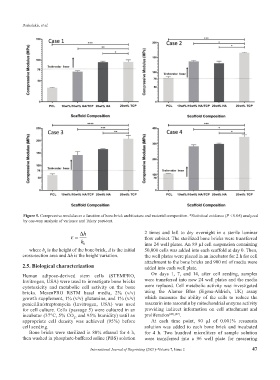
Figure 5. Compressive modulus as a function of bone brick architecture and material composition. *Statistical evidence (P < 0.05) analyzed
by one-way analysis of variance and Tukey post-test.
Δh 2 times and left to dry overnight in a sterile laminar
= flow cabinet. The sterilized bone bricks were transferred
h 0 into 24 well plates. An 89 μl cell suspension containing
where h is the height of the bone brick, A is the initial 50,000 cells was added into each scaffold at day 0. Then,
0
cross-section area and Δh is the height variation. the well plates were placed in an incubator for 2 h for cell
attachment to the bone bricks and 900 ml of media were
2.5. Biological characterization added into each well plate.
Human adipose-derived stem cells (STEMPRO, On days 1, 7, and 14, after cell seeding, samples
Invitrogen, USA) were used to investigate bone bricks were transferred into new 24 well plates and the media
cytotoxicity and metabolic cell activity on the bone were replaced. Cell metabolic activity was investigated
bricks. MesenPRO RSTM basal media, 2% (v/v) using the Alamar Blue (Sigma-Aldrich, UK) assay
growth supplement, 1% (v/v) glutamine, and 1% (v/v) which measures the ability of the cells to reduce the
penicillin/streptomycin (Invitrogen, USA) was used resazurin into resorufin by mitochondrial enzyme activity
for cell culture. Cells (passage 5) were cultured in an providing indirect information on cell attachment and
incubator (37°C, 5% CO , and 95% humidity) until an proliferation [20],[27] .
2
appropriate cell density was achieved (95%) before At each time point, 90 μl of 0.001% resazurin
cell seeding. solution was added to each bone brick and incubated
Bone bricks were sterilized in 80% ethanol for 4 h, for 4 h. Two hundred microliters of sample solution
then washed in phosphate-buffered saline (PBS) solution were transferred into a 96 well plate for measuring
International Journal of Bioprinting (2021)–Volume 7, Issue 2 47

