


Page 133 - IJB-7-3
P. 133
Rueda-Gensini, et al.
           number of cells. Four different areas of each hydrogel   for 3 h. The medium was then removed and fluorescence
           were evaluated for statistical analysis.            intensity was quantified with a FluoroMax® fluorometer
               Cell morphology changes were assessed in SISMA   (Horiba,  Kyoto,  Japan)  at  560  nm  excitation.  Fresh
           and SISMA-GO bioprinted constructs by staining F-actin   culture medium was added to the assayed constructs to
           filaments  with  AlexaFluor   488  Phalloidin  and  cell   continue incubation until the next measurement.
                                  TM
           nuclei  with  Hoechst  3342  at  day  0  and  day  6.  Briefly,
           tissues were fixed with 10% (v/v) formalin for 30 min   2.14. Characterization of GO reduced in situ
           and washed with 1× PBS 3 times to remove remnants of   GO’s  in situ  reduction  was  confirmed  with  Fourier
           formalin. Cell membranes were then permeabilized with   Transform   Infrared   (FT-IR)   spectroscopy   and
           a 0.25% (w/v) solution of Triton-X in 1× PBS for 5 min   thermogravimetric  analysis  (TGA).  Infrared  spectra  of
           and subsequently washed 3 times with 1× PBS. Finally,   graphite, GO, and rGO were recorded using an A250/D FT-
           a working solution of AlexaFluor  488 Phalloidin and   IR (Bruker, Germany) within the range of 4000 – 400 cm
                                        TM
                                                                                                             −1
           Hoechst 3342 was prepared at a 1:400 and 1:1000 ratios   and spectral resolution of 2 cm . The presence or absence
                                                                                        −1
           in 1× PBS, respectively, and then added to the constructs   of  characteristic  peaks  of  each  material  was  analyzed
           and incubated for 1 h.  The stained constructs were   to assess structural changes within these.  TGA (TA
           washed 3 times with 1× PBS and immediately visualized   Instruments) was also performed on these three materials
           with  confocal  microscopy  using  488  nm  and  358  nm   from 30 to 800°C, with a temperature ramp of 10°C/min,
           laser  excitations,  respectively.  Five  images  at  a  20×   to  compare  thermal  stability  differences  that  may  arise
           magnification were captured and stacked from adjacent   from  structural  defects  within  these.  Sample  masses  of
           Z-planes, separated by 2 µm each, and emission channels   5 mg were used for this analysis. Reduction was further
           were overlapped. Similarly, single-cell morphology was   confirmed  with  Raman  spectroscopy  (0  –  3000  Raman
                                                                      −1
           observed by capturing and stacking 45 images collected   shift [cm ]) of the bioprinted constructs after 3 days of
           at 60× magnification.                               incubation in DMEM culture medium supplemented with
               Cell  proliferation  in  SISMA  and  SISMA-GO   0.5 mM ascorbic acid at 37°C. The treated constructs were
           constructs was also assayed by quantifying cell metabolic   lyophilized to avoid noise by water presence during data
           activity at days 0, 4, and 7 aided by a resazurin-based   collection and point wise laser excitation of 532 nm was
           assay (TOX8). Reduced resazurin by viable cells emits red   performed at different locations within the samples.
           fluorescence and, therefore, the amount of dye conversion
           was  fluorometrically  measured.  Accordingly,  resazurin   2.15. Electroconductivity of GO reduced in situ
           dye solution was added to the cell culture medium of each   Since  GO  was  incorporated  at  a  low  concentration
           construct at a 10% (v/v) concentration and then incubated   of  0.25  mg/mL,  contacts  between  all  GO  sheets


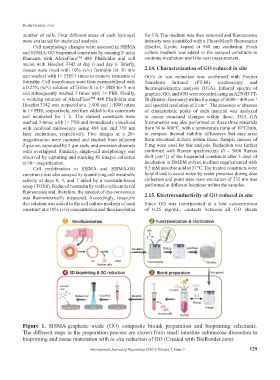
           Figure  1.  SISMA-graphene  oxide  (GO)  composite  bioink  preparation  and  bioprinting  schematic.
           The different steps in the preparation process are shown from small intestine submucosa dissection to
           bioprinting and tissue maturation with in situ reduction of GO (Created with BioRender.com).

                                       International Journal of Bioprinting (2021)–Volume 7, Issue 3       129

