


Page 203 - IJB-8-4
P. 203
Ghosh and Yi
           augmentation in algal biotechnology [159,160] . Furthermore,   Membrane fabrication  was the following phase,
           this type of setup can aid the investigation of natural coral   wherein   silicone   elastomer   polydimethylsiloxane
           morphology and incite translation to other contexts.  (PDMS) was combined with the curing agent at a 10:1
                                                               ratio and poured on top of the PMMA mold. The PDMS
           6.3.2. 3D printing of leaf-like structures for CO2   duplicate was peeled off from the PMMA mold for the
           reduction                                           suggested  artificial  leaf’s  bottom  reservoir  after  being
           Liu et al. were the first use cyanobacterial metabolism   hardened  in  an  oven.  The  spin  speed  was  carefully
           to recover CO  in a hierarchically porous and transparent   managed to establish a 40  μm  gas-permeable  layer  on
                       2
           microsystem [165] .  A  3D  architecture  of  a  natural  leaf   top  of the  PDMS membrane [166] .  Using  a  laser  cutting
           with multi-scaled levels was imitated so that (i) water/  tool, the botanic fiber layer was meticulously designed.
           nutrients  could be transmitted  to the bacterial  cells   Due to evaporation from sunlight, nutrients and water
           through the botanic fiber layer (c.f. xylem and phloem),   were  transmitted  from  an  external  media  reservoir  to
           (ii) the cyanobacterial layer in the system could perform   photosynthetic  bacterial  cells,  while  capillary  force
           photosynthesis and respiration to decrease CO  levels (c.f.   pushed the botanic fiber tube along, imitating the xylem
                                                 2
           mesophyll), and (iii) solar evaporation could help build   and phloem of a natural leaf [165].
           up capillary force through the translucent  and porous   The sol-gel transition of the bioink (i.e., hydrogel-
           membrane  layer  (c.f.  epidermis),  potentially  allowing   encapsulated cyanobacteria) must be carefully controlled
           self-sustaining  capabilities.  The  authors  developed  a   for materials to retain their shape when patterned on
           self-sustaining, biological artificial leaf that significantly   the  botanic  fiber  layer  in  this  bioprinting  method.  In
           lowered CO  levels in the atmosphere and exchanged it   deionized water with 0.5 M CaCl , cyanobacterial cells
                     2
           with O 2 [165] . Moreover, this artificial leaf structure can aid   were encased in 6% (w/v) alginate. 2
           in understanding the natural leaf structure, water, and gas   The diffusion time required for the sol-gel transition
           transport processes within natural leaves.          increased as the calcium concentration increased, resulting
               The preparation started with the culture of bacterial   in  greater  shear  stress  on  the  cells. As  the  rate  of  the
           inoculum. The cyanobacterial stain Synechocystis sp. PCC   reaction was slow, a partial uncross linked alginate layer
           6803 was utilized for this procedure. Synechocystis spp.   could be deposited on the crosslinked layer; this bioink
           PCC  6803  was  grown  from  glycerol  stock  cultures  at   could be used to print several multilayered patterns. The
           80°C by inoculating  15  mL of  BG-11  medium  under   printing was conducted using a 3D Vitarix™ bioprinter
                                       5
           gentle shaking with 12 h light and dark intervals. The BG-  with  the  following  settings:  pressure:  ~20  Mkpa;  print
           11 media consisted of 40 mg of K HPO , 1.5 g of NaNO ,   speed: 25 mm s , infill density: 30%; and nozzle size:
                                                                            −1
                                            4
                                       2
                                                         3
           36 mg of CaCl , 75 mg of MgSO , 6 mg of citric acid,   23 Gauge.
                        2
                                        4
           1 mg of EDTA, and 6 mg of ferric ammonium citrate per   The  final  stage  involved  the  bioprinting  of  the
           1 L of distilled water. For 2 weeks, a fluorescent lamp-  cyanobacterial cell-laden hydrogel on top of the botanic
           controlled chamber offered continuous aeration and   fiber layer and covering it with a gas-permeable PDMS
           illumination at a temperature of 30 ± 2°C. The optical   membrane. The system generated a hybrid hierarchical
           density at 600 nm (OD ) was used to track growth.   cell/alginate architecture, with the gas permeable PDMS
                              600
           5  BG11 is a universal medium for the cultivation and maintenance of blue   membrane encouraging gas exchange to the bacteria and
            green algae (cyanobacteria).                       botanic fiber layer supplying nutrients and water.
                        A                                    D                 E


                         B                 C                 F                 G


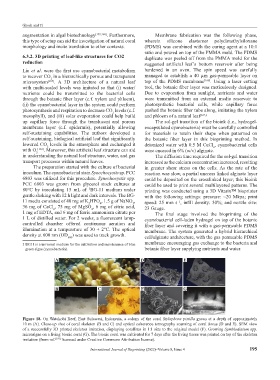
           Figure 18. On Watakobi Reef, East Sulawesi, Indonesia, a colony of the coral Stylophora pistilla grows at a depth of approximately
           10 m (A). Close-up shot of coral skeleton (B and C) and optical coherence tomography scanning of coral tissue (D and E). SEM view
           of a successfully 3D printed skeleton imitation, displaying corallites in 1:1 size to the original model (F). Growing Symbiodinium spp.
           microalgae on a living bionic coral (G). The bionic coral was cultivated for 7 days after the living tissue was printed on top of the skeleton
           imitation (from ref. [159]  licensed under Creative Commons Attribution license).

                                       International Journal of Bioprinting (2022)–Volume 8, Issue 4       195

