


Page 17 - IJB-9-2
P. 17
International Journal of Bioprinting                                      Extrusion-based biomaterial inks


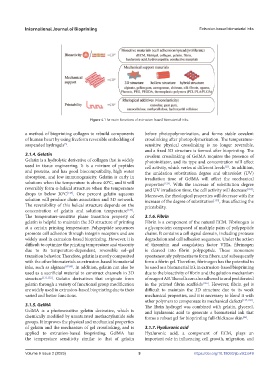
                                       Figure 4. The main functions of extrusion-based biomaterial inks.


            a method of bioprinting collagen to rebuild components   before photopolymerization, and forms stable covalent
            of human heart by using freeform reversible embedding of   crosslinking after photopolymerization. The temperature-
            suspended hydrogels .                              sensitive physical crosslinking is no longer reversible,
                            [5]
                                                               and a fixed 3D structure is formed after bioprinting. The
            3.1.4. Gelatin                                     covalent crosslinking of GelMA requires the presence of
            Gelatin is a hydrolytic derivative of collagen that is widely   photoinitiator,  and  its  type  and  concentration  will  affect
            used in tissue engineering. It is a mixture of peptides   cell activity, which varies at different levels . In addition,
                                                                                                 [13]
            and proteins, and has good biocompatibility, high water   the amidation substitution degree and ultraviolet (UV)
            absorption, and low immunogenicity. Gelatin is curly in   irradiation time of GelMA will affect the mechanical
            solutions when the temperature is above 40°C, and it will   properties [133] . With the increase of substitution degree
            reversibly form α-helical structure when the temperature   and UV irradiation time, the cell activity will decrease [134] ;
            drops to below 30°C [129] . One percent gelatin aqueous   Moreover, the rheological properties will decrease with the
            solution will produce chain association and 3D network.   increase of the degree of substitution [135] , thus affecting the
            The reversibility of this helical structure depends on the   printability.
            concentration of gelatin and solution temperature [130] .
            The temperature-sensitive phase transition property of   3.1.6. Fibrin
            gelatin is helpful to maintain the 3D structure of printing   Fibrin is a component of the natural ECM. Fibrinogen is
            at a certain printing temperature. Polypeptide sequences   a glycoprotein composed of multiple pairs of polypeptide
            promote cell adhesion through integrin receptors and are   chains. It contains a cell signal domain, including protease
            widely used in extrusion-based bioprinting. However, it is   degradation and cell adhesion sequences. Under the action
            difficult to optimize the printing temperature and viscosity   of thrombin and coagulation factor VIIIa, fibrinogen
            due  to  its  temperature-dependent,  reversible  sol–gel   is cleaved into fibrin polypeptide. These monomers
            transition behavior. Therefore, gelatin is mostly composited   spontaneously polymerize to form fibers, and subsequently
            with the other biomaterials as extrusion-based biomaterial   form a fibrin gel. Therefore, fibrinogen has the potential to
            inks, such as alginate [87,88] . In addition, gelatin can also be   be used as a biomaterial ink in extrusion-based bioprinting
            used as a sacrificial material to construct channels in 3D   due to the bioactivity of fibrin and the gelation mechanism
            structure [131,132] . Gelatin derivatives that originate from   of reagent AB. The cells can also adhered to and proliferated
            gelatin through a variety of functional group modification   in the printed fibrin scaffolds [136] . However, fibrin gel is
            are widely used in extrusion-based bioprinting due to their   difficult to maintain the 3D structure due to its weak
            varied and better functions.                       mechanical properties, and it is necessary to blend it with
                                                               other polymers to compensate its mechanical defects [137,138] .
            3.1.5. GelMA                                       The fibrin hydrogel was combined with gelatin, glycerol,
            GelMA is a photosensitive gelatin derivative, which is   and hyaluronic acid to generate a biomaterial ink that
            chemically modified by unsaturated methacrylamide side   forms a robust gel for bioprinting full-thickness skin .
                                                                                                         [46]
            groups. It improves the physical and mechanical properties
            of gelatin and the mechanism of gel crosslinking, and is   3.1.7. Hyaluronic acid
            applied to extrusion-based bioprinting. GelMA has   Hyaluronic acid, a component of ECM, plays an
            the temperature sensitivity similar to that of gelatin   important role in influencing cell growth, migration, and


            Volume 9 Issue 2 (2023)                         9                       https://doi.org/10.18063/ijb.v9i2.649

