


Page 219 - IJB-9-2
P. 219
International Journal of Bioprinting                       Three-dimensional bioprinting in toxicological research


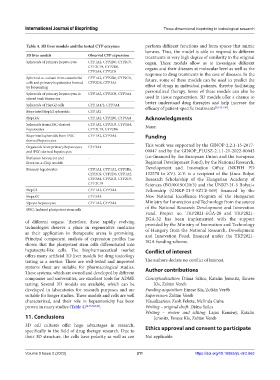
            Table 4. 3D liver models and the tested CYP enzymes  perform different functions and form spaces that mimic
                                                               lumens. Thus, the model is able to respond to different
            3D liver models            Observed CYP expression  treatments in very high degree of similarity to the original
            Spheroids of primary hepatocytes  CYP1A2, CYP2B6, CYP2C9,   organ. These models allow us to investigate different
                                       CYP2C19, CYP2D6,        organs and their diseases at molecular level as well as the
                                       CYP3A4, CYP2C8          response to drug treatments in the case of diseases. In the
            Spheroid co-culture from endothelial   CYP1A2, CYP2B6, CYP2C9,   future, some of these models can be used to predict the
            cells and primary hepatocytes formed   CYP2D6, CYP3A4
            by bioprinting                                     effect of drugs in individual patients, thereby facilitating
            Spheroids of primary hepatocytes in   CYP1A2, CYP2C9, CYP3A4  personalized therapy. Some of these models can also be
            stirred tank bioreactor                            used in tissue regeneration. 3D models offer a chance to
                                                               better understand drug therapies and help increase the
            Spheroids of HepG2 cells   CYP1A1/2, CYP3A4
                                                               efficacy of patient-specific treatments [8,142-146] .
            Bioprinted HepG2 spheroids  CYP1A2
            HepaRG                     CYP1A2, CYP2B6, CYP3A4  Acknowledgments
            Spheroids from iPSC-derived   CYP1A2, CYP2C9, CYP3A4,   None.
            hepatocytes                CYP2C19, CYP2D6
            Bioprinted spheroids from iPSC   CYP1A2, CYP3A4    Funding
            derived hepatocytes
            Organoids from primary hepatocytes   CYP3A4        This work was supported by the GINOP-2.2.1-15-2017-
            and iPSC-derived hepatocytes                       00047 and by the GINOP_PLUSZ-2.1.1-21-2022-00043
            Perfusion bioreactor and   -                       (co-financed by the European Union and the European
            Liver-on-a-Chip models                             Regional Development Fund), by the National Research,
            Primary hepatocytes        CYP1A1, CYP1A2, CYP2B6,   Development and Innovation Office (NKFIH PD
                                       CYP2C9, CYP2D6, CYP1A2,   132570 to ZV). Z.V. is a recipient of the János Bolyai
                                       CYP3A4, CYP2C8, CYP2C9,   Research Scholarship of the Hungarian Academy of
                                       CYP2C19                 Sciences (BO/00190/20/5) and the ÚNKP-21-5 Bolyai+
            HepG2                      CYP1A2, CYP3A4          Fellowship (ÚNKP-21-5-SZTE-169) financed by the
            HepaRG                     CYP3A4                  New National Excellence Program of the Hungarian
            Upcyte hepatocytes         CYP1A2, CYP3A4          Ministry for Innovation and Technology from the source
            iPSC: Induced pluripotent stem cells               of the National Research Development and Innovation
                                                               Fund. Project no. TKP2021-EGA-28 and TKP2021-
                                                               EGA-32 has been implemented with the support
            of different organs. Therefore, these rapidly evolving   provided by the Ministry of Innovation and Technology
            technologies deserve a place in regenerative medicine   of Hungary from the National Research, Development
            as  their  application  in  therapeutic  arena  is  promising.   and Innovation Fund, financed under the TKP2021-
            Principal component analysis of expression profiles has   EGA funding scheme.
            shown that the pluripotent stem cells differentiated into
            hepatocyte-like cells. The biopharmaceutical market   Conflict of interest
            offers many artificial 3D liver models for drug toxicology
            testing as a service. These are well-tested and improved   The authors declare no conflict of interest.
            systems  theat are suitable for  pharmacological  studies.   Author contributions
            These systems, which are owned and developed by different
            companies and universities, are excellent tools for ADME   Conceptualization:  Diána Szűcs, Katalin Jemnitz, Emese
            testing. Several 3D models are available, which can be   Kis, Zoltán Veréb
            developed in laboratories for research purposes and are   Funding acquisition: Emese Kis, Zoltán Veréb
            suitable for longer studies. These models and cells are well   Supervision: Zoltán Veréb
            characterized, and their role in hepatotoxicity has been   Visualization: Zsolt Fekete, Melinda Guba
            proven in many studies (Table 4) [4,35,38,141] .   Writing – original draft: Diána Szűcs
                                                               Writing – review and editing: Lajos Kemény, Katalin
            11. Conclusions                                       Jemnitz, Emese Kis, Zoltán Veréb

            3D cell cultures offer huge advantages in research,
            specifically in the field of drug therapy research. Due to   Ethics approval and consent to participate
            their 3D structure, the cells have polarity as well as can   Not applicable.


            Volume 9 Issue 2 (2023)                        211                      https://doi.org/10.18063/ijb.v9i2.663

