


Page 301 - IJB-9-3
P. 301
International Journal of Bioprinting                  3D bioprinting as a prospective therapeutic strategy for LSCD


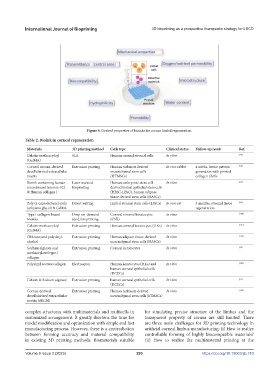
                                      Figure 4. Desired properties of bioinks for cornea limbal regeneration.
            Table 2. Bioink in corneal regeneration

             Materials          3D printing method  Cells type          Clinical status  Follow-up result  Ref.
             Gelatin-methacryloyl   SLA         Human corneal stromal cells  In vitro                  [97]
             (GelMA)
             Corneal stroma-derived   Extrusion printing  Human turbinate derived   In vivo rabbit   4 weeks, lattice pattern   [98]
             decellularized extracellular       mesenchymal stem cells              generation with printed
             matrix                             (HTMSCs)                            collagen fibrils
             Bioink containing human   Laser-assisted   Human embryonic stem cell   In vitro           [64]
             recombinant laminin-521   bioprinting   derived limbal epithelial stem cells
             & Human collagen I                 (HESC-LESC), human adipose
                                                tissue derived stem cells (HASCs)
             Poly (ε-caprolactone)-poly   Direct writing  Limbal stromal stem cells (LSSCs)  In vivo rat  3 months, stromal tissue   [99]
             (ethylene glycol) & GelMa                                              regeneration
             Type I collagen-based   Drop-on-demand   Corneal stromal keratocytes   In vitro           [100]
             bioinks            (dod) bioprinting  (CSK)
             Gelatin-methacryloyl   Extrusion printing  Human corneal keratocytes (HKs)  In vitro      [101]
             (GelMA)
             Chitosan and polyvinyl-  Extrusion printing  Human adipose tissue-derived   In vitro      [102]
             alcohol                            mesenchymal stem cells (HASCs)
             Sodium alginate and   Extrusion printing  Corneal keratocytes  In vitro                   [65]
             methacrylated type I
             collagen
             Polyvinyl acetate/collagen  Electrospun  Human keratocytes (HKs) and   In vitro           [103]
                                                human corneal epithelial cells
                                                (HCECs)
             Gelatin & Sodium alginate  Extrusion printing  human corneal epithelial cells   In vitro  [63]
                                                (HCECs)
             Cornea-derived     Extrusion printing  Human turbinate derived   In vitro                 [104]
             decellularized extracellular       mesenchymal stem cells (hTMSCs)
             matrix (dECM)

            complex structures with multimaterials and multicells in   for simulating precise structure of the limbus and the
            customized arrangement. It greatly shortens the time for   transparent property of cornea are still limited. There
            model modification and optimization with simple and fast   are three main challenges for 3D printing technology in
            manufacturing process. However, there is a contradiction   artificial corneal limbus manufacturing: (i) How to realize
            between  forming  accuracy  and  material  compatibility   controllable forming of highly biocompatible materials?
            in existing 3D printing methods. Biomaterials suitable   (ii) How to realize the multimaterial printing at the

            Volume 9 Issue 3 (2023)                        293                          https://doi.org/10.18063/ijb.710

