


Page 452 - IJB-9-4
P. 452
International Journal of Bioprinting               Single-step bioink deposition and maturation of human epidermis


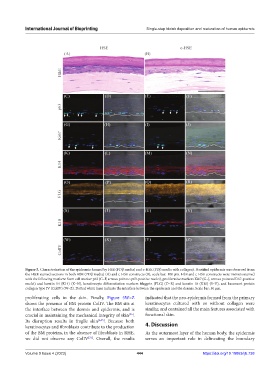
            Figure 5. Characterization of the epidermis formed by HSE (PDβ media) and c-HSE (PDβ media with collagen). Stratified epidermis was observed from
            the H&E stained sections in both HSE (PDβ media) (A) and c-HSE constructs (B), scale bar: 100 µm. HSE and c-HSE constructs were immunostained
            with the following markers: Stem cell marker p63 (C–F, arrows point to p63-positive nuclei), proliferative markers Ki67 (G–J, arrows point to Ki67-positive
            nuclei) and keratin 14 (K14) (K–N), keratinocyte differentiation markers filaggrin (FLG) (O–R) and keratin 10 (K10) (S–V), and basement protein
            collagen type IV (ColIV) (W–Z). Dotted white lines indicate the interface between the epidermis and the dermis. Scale bar: 50 µm.
            proliferating cells in the skin. Finally,  Figure  5W–Z   indicated that the neo-epidermis formed from the primary
            shows the presence of BM protein ColIV. The BM sits at   keratinocytes cultured with or without collagen were
            the interface between the dermis and epidermis, and is   similar, and contained all the main features associated with
            crucial in maintaining the mechanical integrity of skin .   functional skin.
                                                        [35]
            Its disruption results in fragile skin [6,35] . Because both
            keratinocytes and fibroblasts contribute to the production   4. Discussion
            of the BM proteins, in the absence of fibroblasts in RHE,   As the outermost layer of the human body, the epidermis
            we did not observe any ColIV . Overall, the results   serves an important role in delineating the boundary
                                       [31]

            Volume 9 Issue 4 (2023)                        444                         https://doi.org/10.18063/ijb.738

