


Page 451 - IJB-9-4
P. 451
International Journal of Bioprinting               Single-step bioink deposition and maturation of human epidermis


                         A                    B                         C


                         D                                     E


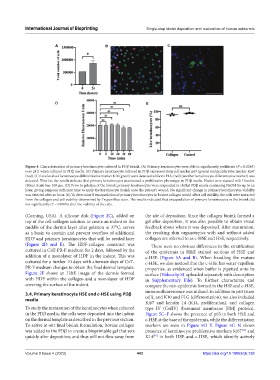
            Figure 4. Characterization of primary keratinocytes cultured in PDβ bioink. (A) Primary keratinocytes were able to significantly proliferate (P = 0.0245)
            over 24 h when cultured in PDβ media. (B) Primary keratinocyte cultured in PDβ expressed stem cell marker p63 (green) and proliferative marker Ki67
            (red). (C) Low levels of keratinocyte differentiative marker K10 (green) were detected while no FLG (red) (another keratinocyte differentiative marker) was
            detected. Thus far, the results indicate that primary keratinocytes maintained a proliferative phenotype in PDβ media. Nuclei were stained with Hoechst
            (Blue). Scale bar: 100 µm. (D) Prior to gelation of the bioink, primary keratinocytes were suspended in chilled PDβ media containing NaOH for up to an
            hour, giving surgeons sufficient time to apply the keratinocyte bioink onto the patient’s wound. No significant change in primary keratinocytes viability
            was detected after an hour. (E) To determine if encapsulation of primary keratinocytes in bovine collagen would affect cell viability, the cells were extracted
            from the collagen and cell viability determined by Trypan blue stain. The results indicated that encapsulation of primary keratinocytes in the bioink did
            not significantly (P = 0.0996) alter the viability of the cells.
            (Corning, USA). A  silicone disk (Figure  2C), added on   the site of deposition. Since the collagen bioink formed a
            top of the cell-collagen solution to create an indent in the   gel after deposition, it was also possible to obtain visual
            middle of the dermis layer after gelation at 37°C, serves   feedback about where it was deposited. After maturation,
            as a basin to contain and prevent overflow of additional   the resulting skin organotypics with and without added
            HDF and primary keratinocytes that will be seeded later   collagen are referred to as c-HSE and HSE, respectively.
            (Figure  2D  and  E). The HDF-collagen construct was   There were no obvious differences in the stratification
            cultured in CnT-PR-F medium for 2 days, followed by the   of the epidermis in H&E stained sections of HSE and
            addition of a monolayer of HDF in the indent. This was   c-HSE (Figure  5A  and  B). When handling the mature
            cultured for a further 10 days with alternate days of CnT-  c-HSE, we also noticed that the c-HSE has water-repellent
            PR-F medium changes to obtain the final dermal template.   properties, as evidenced when buffer is pipetted onto its
            Figure  2F shows an H&E image of the  dermis formed   surface (Videoclip S1 uploaded separately with description
            with HDF within the collagen and a monolayer of HDF   in  Supplementary File). To  further characterize  and
            covering the surface of the indent.                compare the neo-epidermis formed in the HSE and c-HSE,
            3.4. Primary keratinocyte HSE and c-HSE using PDβ   immunofluorescence was utilized. In addition to p63 (stem
            media                                              cell), and K10 and FLG (differentiation), we also included
                                                               Ki67 and keratin 14 (K14, proliferation), and collagen
            To study the maturation of the keratinocytes when cultured   type  IV (ColIV) (basement membrane [BM] protein).
            in the PDβ media, the cells were deposited into the indent   Figure 5C–F shows the presence of p63 in both HSE and
            on the dermal template as described in the previous section.   c-HSE at the base of the epidermis, while the differentiation
            To arrive at our final bioink formulation, bovine collagen   markers are seen in  Figure  5O–V.  Figure  5G–N shows
            was added to the PDβ to create a bioprintable gel that sets   presence of keratinocyte proliferative markers Ki67  and
                                                                                                        [33]
            quickly after deposition, and thus will not flow away from   K14   in both HSE  and  c-HSE,  which  identify  actively
                                                                  [34]

            Volume 9 Issue 4 (2023)                        443                         https://doi.org/10.18063/ijb.738

