


Page 436 - IJB-9-5
P. 436
International Journal of Bioprinting        3D printed topographically fabricated micron track peripheral nerve conduit


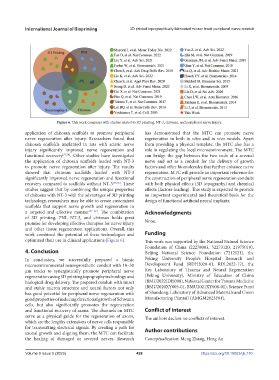
                         Figure 6. This work compares with studies related to 3D printing, NT-3, chitosan, and peripheral nerve injury.
            application of chitosan scaffolds to promote peripheral   has demonstrated that the MTC can promote nerve
            nerve regeneration after injury. Researchers found that   regeneration in both  in vitro and  in vivo models. Apart
            chitosan scaffolds implanted in rats with sciatic nerve   from providing a physical template, the MTC also has a
            injury significantly improved nerve regeneration and   role in regulating the local microenvironment. The MTC
            functional recovery [73,74] . Other studies have investigated   can bridge the gap between the two ends of a severed
            the application of chitosan scaffolds loaded with NT-3   nerve and act as a conduit for the delivery of growth
            to promote nerve regeneration after injury. The results   factors and other biomolecules that further enhance nerve
            showed that chitosan scaffolds loaded with NT-3    regeneration. MTC will provide an important reference for
            significantly improved nerve regeneration and functional   the construction of peripheral nerve regeneration conduits
            recovery compared to scaffolds without NT-3 [75,76] . These   with both physical effects (3D topography) and chemical
            studies suggest that by combining the unique properties   effects (factors-loading). This study is expected to provide
            of chitosan with NT-3 with the advantages of 3D printing   an important experimental and theoretical basis for the
            technology, researchers may be able to create customized   design of functional artificial neural implants.
            scaffolds that support nerve growth and regeneration in
            a targeted and effective manner [77–79] . The combination   Acknowledgments
            of 3D printing, PNI, NT-3, and chitosan holds great
            promise for developing effective therapies for nerve injury   None.
            and other tissue regeneration applications. Overall, this
            work combined the potential of these technologies and   Funding
            optimized their use in clinical applications (Figure 6).  This work was supported by the National Natural Science
                                                               Foundation of China (22278003, 52273120, 21975019),
            4. Conclusion                                      Beijing National Science Foundation (7212121), the
            In  conclusion,  we  successfully prepared a  bionic   Peking University People’s Hospital Research and
            microenvironmental neuroprosthetic conduit with 10–30   Development Fund  (RDH2020-01,  RDL2022-17),  the
            μm tracks to synergistically promote peripheral nerve   Key  Laboratory  of  Trauma  and Neural Regeneration
            regeneration using 3D printing topography technology and   (Peking University), Ministry of Education of China
            biological drug delivery. The prepared conduit with intact   (BMU2022JDJS008), National Center for Trauma Medicine
            and  stable  micron  structure  and neural  factors  not  only   (BMU2020XY005-01, BMU2021XY008-01), Science Fund
            has good potential for peripheral nerve regeneration with   of Shandong, Laboratory of Advanced Materials and Green
            good properties of inducing directional growth of Schwann   Manufacturing (Yantai) (AMGM2023F04).
            cells, but also significantly promotes the regeneration
            and functional recovery of axons. The channels on MTC   Conflict of interest
            serve  as  a  physical  guide  for  the  regeneration  of  axons,   The authors declare no conflicts of interest.
            which are the lengthy extensions of nerve cells responsible
            for transmitting electrical signals. By creating a path for   Author contributions
            axonal growth and aligning them, the MTC can facilitate
            the healing of damaged or severed nerves. Research   Conceptualization: Meng Zhang, Heng An


            Volume 9 Issue 5 (2023)                        428                         https://doi.org/10.18063/ijb.770

