


Page 457 - IJB-9-5
P. 457
International Journal of Bioprinting                             3D-printed oblique lumbar interbody cage


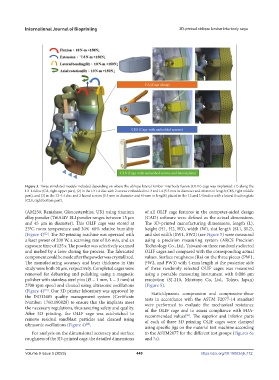
            Figure 3. Three simulated models included depending on where the oblique lateral lumbar interbody fusion (OLIF) cage was implanted: (1) along the
            L3–L4 disc (CA, right upper part), (2) in the L3-L4 disc with 2 screws embedded in L3 and L4 (5.5 mm in diameter and 40 mm in length; CES, right middle
            part), and (3) in the L3–L4 disc and 2 lateral screws (5.5 mm in diameter and 40 mm in length) placed in the L3 and L4 bodies with a lateral fixation plate
            (CLS, right bottom part).


            (AM250, Renishaw, Gloucestershire, UK) using titanium   of all OLIF cage features in the computer-aided design
            alloy powder (Ti6Al4V ELI powder ranges between 15 μm   (CAD) software were defined as the actual dimensions.
            and 45 μm in diameter). This OLIF cage was stored at   The 3D-printed manufacturing dimensions, length (L),
            23°C room temperature and 30%–60% relative humidity   height (H1, H2, H3), width (W), slot length (SL1, SL2),
                    [22]
            (Figure 4) . The 3D printing machine was operated with   and slot width (SW1, SW2) (see Figure 5) were measured
            a laser power of 200 W, a scanning rate of 0.6 m/s, and an   using a precision measuring system (ARCS Precision
            exposure time of 125 s. The powder was selectively scanned   Technology Co., Ltd., Taiwan) on three randomly selected
            and melted by a laser during the process. The fabricated   OLIF cages and compared with the corresponding actual
            component could be made after the powder was crystallized.   values. Surface roughness (Ra) on the three pieces (PW1,
            The manufacturing accuracy and layer thickness in this   PW2, and PW3) with 4-mm length at the posterior side
            study were both 30 μm, respectively. Completed cages were   of three randomly selected OLIF cages was measured
            removed for deburring and polishing using a magnetic   using a portable measuring instrument with 0.006 µm
            polisher with stainless steel pins (Ø = 1 mm, L = 3 mm) at   resolution (SJ-210, Mitutoyo Co, Ltd., Tokyo, Japan)
            2700 rpm speed and cleaned using ultrasonic oscillations   (Figure 5).
                    [24]
            (Figure 4) . Our 3D printer laboratory was approved by   Static/dynamic compression and compressive-shear
            the  ISO13485  quality  management  system  (Certificate   tests in  accordance with the  ASTM F2077-14 standard
            Number: 1760.190828) to ensure that the implants meet   were performed to evaluate the mechanical resistance
            the necessary regulations, thus assuring safety and quality.   of the  OLIF cage  and to assess  compliance  with FDA-
            After 3D printing, the OLIF cage was acid-etched to   recommended values . The superior and inferior parts
                                                                                [26]
            remove residual sandblast particles and cleaned using   of  each  of  three  3D  printing  OLIF  cages  were  clamped
                                      [24]
            ultrasonic oscillations (Figure 4) .               using specific jigs on the material test machine according
               For analysis on the dimensional accuracy and surface   to the ASTM2077 for the different test groups (Figures 6a
            roughness of the 3D-printed cage, the detailed dimensions   and 7a).


            Volume 9 Issue 5 (2023)                        449                         https://doi.org/10.18063/ijb.772

