


Page 268 - IJB-9-6
P. 268
International Journal of Bioprinting                                     3D bioprinting for vascular system


                                                        [24]
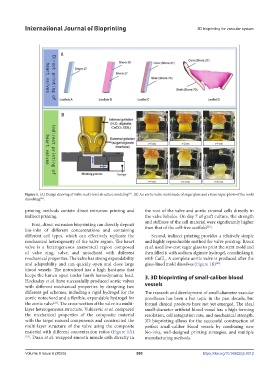
            Figure 1. (A) Design drawing of valve multi-level structure modeling . (B) An aortic valve mold made of sugar glass and a time-lapse photo of the mold
                  [26]
            dissolving .
            printing methods contain direct extrusion printing and   the root of the valve and aortic stromal cells directly in
            indirect printing.                                 the valve lobules. On day 7 of graft culture, the strength
               First, direct extrusion bioprinting can directly deposit   and stiffness of the cell material were significantly higher
                                                                                         [25]
            bio-inks of different concentrations and containing   than that of the cell-free scaffold .
            different cell types, which can effectively replicate the   Second, indirect printing provides a relatively simple
            mechanical heterogeneity of the valve region. The heart   and highly reproducible method for valve printing. Rioux
            valve is a heterogeneous anatomical region composed   et al. used low-cost sugar glass to print the stent mold and
            of valve ring, valve, and notochord with different   then filled it with sodium alginate hydrogel, crosslinking it
            mechanical properties. The valve has strong expandability   with CaCl . A complete aortic valve is produced after the
                                                                       2
            and adaptability and can quickly open and close large   glass-lined mold dissolves (Figure 1B) .
                                                                                             [26]
            blood vessels. The notochord has a high hardness that
            keeps the lumen open under harsh hemodynamic load.   3. 3D bioprinting of small-caliber blood
            Hockaday et al. have successfully produced aortic valves
            with different mechanical properties by designing two   vessels
            different gel schemes, including a rigid hydrogel for the   The research and development of small-diameter vascular
            aortic notochord and a flexible, expandable hydrogel for   prostheses has been a hot topic in the past decade, but
            the aortic valve . The cross-section of the valve is a multi-  formal clinical products have not yet emerged. The ideal
                        [23]
            layer heterogeneous structure. Vukicevic et al. compared   small-diameter artificial blood vessel has a high forming
            the mechanical properties of the composite material   resolution, cell integration rate, and mechanical strength.
            with the target natural components and constructed the   3D bioprinting allows for the successful construction of
            multi-layer structure of the valve using the composite   perfect small-caliber blood vessels by combining new
            material with different concentration ratios (Figure 1A)  bio-inks, well-designed printing strategies, and multiple
            [24] . Duan et al. wrapped smooth muscle cells directly in   manufacturing methods.


            Volume 9 Issue 6 (2023)                        260                          https://doi.org/10.36922/ijb.0012

