


Page 272 - IJB-9-6
P. 272
International Journal of Bioprinting                                     3D bioprinting for vascular system


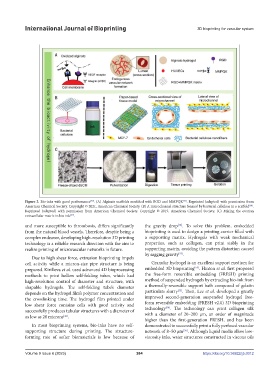
            Figure 3. Bio-inks with good performance . (A) Alginate scaffolds modified with RGD and MMPQK . Reprinted (adapted) with permission from
                                                                               [46]
                                        [40]
            American Chemical Society. Copyright © 2021, American Chemical Society. (B) A microchannel structure formed by bacterial cellulose in a scaffold .
                                                                                                           [48]
            Reprinted (adapted) with permission from American Chemical Society. Copyright © 2019, American Chemical Society. (C) Mixing the ovarian
            extracellular matrix in bio-ink .
                               [49]
            and more susceptible to thrombosis, differs significantly   the gravity drop . To solve this problem, embedded
                                                                             [12]
            from the natural blood vessels. Therefore, despite being a   bioprinting is used to design a printing carrier filled with
            complex endeavor, developing high-resolution 3D printing   a supporting matrix. Hydrogels with weak mechanical
            technology is a reliable research direction with the aim to   properties, such as collagen, can print stably in the
            realize printing of microvascular networks in future.  supporting matrix, avoiding the pattern distortion caused
                                                               by sagging gravity .
                                                                             [53]
               Due to high shear force, extrusion bioprinting impels
            cell activity while a micron-size pipe structure is being   Granular hydrogel is an excellent support medium for
                                                                                    [54]
            prepared. Kirillova et al. used advanced 4D bioprocessing   embedded 3D bioprinting . Hinton et al. first proposed
            methods to print hollow self-folding tubes, which had   the free-form reversible embedding (FRESH) printing
            high-resolution control of diameter and structure, with   method of suspended hydrogels by extruding bio-ink from
            shapable  hydrogels.  The  self-folding  tube’s  diameter   a thermally-reversible support bath composed of gelatin
                                                                             [55]
            depends on the hydrogel film’s polymer concentration and   particulate slurry . Then, Lee et al. developed a greatly
            the crosslinking time. The hydrogel film printed under   improved second-generation suspended hydrogel free-
            low shear force contains cells with good activity and   form reversible embedding (FRESH v2.0) 3D bioprinting
                                                                        [56]
            successfully produces tubular structures with a diameter of   technology . The  technology can  print  collagen  silk
            as low as 20 microns .                             with a diameter of 20–200 µm, an order of magnitude
                            [41]
                                                               higher than the first-generation FRESH, and has been
               In most bioprinting systems, bio-inks have no self-  demonstrated to successfully print a fully perfused vascular
            supporting structure during printing. The structure-  network of 8–50 μm . Although liquid media allow low-
                                                                               [56]
            forming  rate  of  softer  biomaterials  is  low because  of   viscosity inks, water structures constructed in viscous oils


            Volume 9 Issue 6 (2023)                        264                          https://doi.org/10.36922/ijb.0012

