


Page 362 - IJB-9-6
P. 362
International Journal of Bioprinting                                   Surface modification of PCL scaffolds


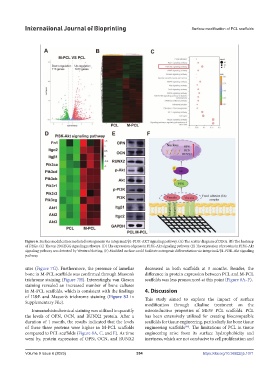
            Figure 6. Surface modification mediated osteogenesis via integrinα2/β1-PI3K-AKT signaling pathway. (A) The scatter diagram of DEGs. (B) The heatmap
            of DEGs. (C) The top 20 KEGG signaling pathways. (D) The expression of genes in PI3K-Akt signaling pathway. (E) The expression of proteins in PI3K-Akt
            signaling pathway was detected by Western blotting. (F) Modified surface could facilitate osteogenic differentiation via integrinα2/β1-PI3K-Akt signaling
            pathway.

            sites (Figure 7G). Furthermore, the presence of lamellar   decreased in both scaffolds at 3 months. Besides, the
            bone in M-PCL scaffolds was confirmed through Masson’s   difference in protein expression between PCL and M-PCL
            trichrome staining (Figure 7H). Interestingly, van Gieson   scaffolds was less pronounced at this point (Figure 8A–F).
            staining revealed an increased number of bone calluses
            in M-PCL scaffolds, which is consistent with the findings   4. Discussion
            of  H&E and  Masson’s trichrome  staining (Figure S2  in   This study aimed to explore the impact of surface
            Supplementary File).                               modification through alkaline treatment on the
               Immunohistochemical staining was utilized to quantify   osteoinductive properties of MEW PCL scaffolds. PCL
            the levels of OPN, OCN, and RUNX2 protein. After a   has been extensively utilized for creating biocompatible
            duration of 1 month, the results indicated that the levels   scaffolds for tissue engineering, particularly for bone tissue
            of these three proteins were higher in M-PCL scaffolds   engineering scaffolds . The limitations of PCL in tissue
                                                                                [46]
            compared to PCL scaffolds (Figure 8A, C, and E). As time   engineering arise from its surface hydrophobicity and
            went by, protein expression of OPN, OCN, and RUNX2   inertness, which are not conducive to cell proliferation and


            Volume 9 Issue 6 (2023)                        354                          https://doi.org/10.36922/ijb.1071

