


Page 42 - IJB-9-6
P. 42
International Journal of Bioprinting                                 Transdermal delivery of printed cisplatin


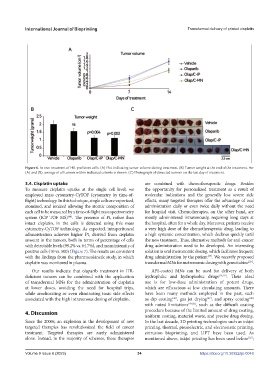
            Figure 6. In vivo treatment of HR-proficient cells. (A) Plot indicating tumor volume during treatment. (B) Tumor weight at the end of the treatment. For
            (A) and (B), average of all tumors within indicated cohorts is shown. (C) Photograph of dissected tumors on the last day of treatment.

            3.4. Cisplatin uptake                              are combined with chemotherapeutic drugs. Besides
            To  measure  cisplatin  uptake  at  the  single  cell  level,  we   the opportunity for personalized treatment as a result of
            employed mass cytometry-CyTOF (cytometry by time-of-  molecular indications and the generally less severe side
            flight) technology. In this technique, single cells are vaporized,   effects, many targeted therapies offer the advantage of oral
            atomized, and ionized allowing the atomic composition of   administration  daily  or even twice  daily  without the need
            each cell to be measured by a time-of-flight mass spectrometry   for hospital visit. Chemotherapies, on the other hand, are
                              [44]
            system  (ICP TOF  MS) .  The presence  of Pt,  rather  than   mostly administered intravenously, requiring long stays at
            intact  cisplatin,  in  the  cells  is  detected  using  this  mass   the hospital, often for a whole day. Moreover, patients receive
            cytometry-CyTOF technology. As expected, intraperitoneal   a very high dose of the chemotherapeutic drug, leading to
            administration achieves higher Pt, derived from cisplatin   a high systemic concentration, which declines quickly until
            amount in the tumors, both in terms of percentage of cells   the new treatment. Thus, alternative methods for anti-cancer
            with detectable levels (99.2% vs. 64.7%), and mean intensity of   drug  administration  need  to  be  developed.  An  interesting
            positive cells (10 vs. 500) (Figure 7). The results are consistent   solution is oral metronomic dosing, which facilitates frequent
                                                                                          [45]
            with the findings from the pharmacokinetic study, in which   drug administration by the patient . We recently proposed
                                                                                                           [29]
            cisplatin was monitored in plasma.                 transdermal MNs for metronomic dosing with gemcitabine .
               Our  results  indicate  that  olaparib  treatment  in  HR-  API-coated MNs can be used for delivery of both
            deficient tumors can be combined with the application   hydrophilic and hydrophobic drugs [18,19] . Their ideal
            of transdermal MNs for the administration of cisplatin   use is for low-dose administration of potent drugs,
            at  lower  doses,  avoiding  the  need  for  hospital  trips,   which are efficacious at low circulating amounts. There
            while ameliorating or even eliminating toxic side effects   have been many methods employed in the past, such
            associated with the high intravenous dosing of cisplatin.  as dip coating , gas jet drying , and spray coating
                                                                           [46]
                                                                                         [47]
                                                                                                           [48]
                                                               with noted limitations [49,50] , such as the difficult coating
            4. Discussion                                      procedure because of the limited amount of drug coating,
                                                               uniform coating, material waste, and precise drug dosing.
            Since  the  2000s,  an  explosion  in  the  development  of  new   In the last decade, 3D printing technologies such as inkjet
            targeted therapies has revolutionized the field of cancer   printing, thermal, piezoelectric, and electrostatic printing,
            treatment. Targeted therapies are rarely administered   extrusion  bioprinting,  and  LIFT  have  been  used.  As
            alone. Instead, in the majority of schemes, these therapies   mentioned above, inkjet printing has been used before ;
                                                                                                           [25]

            Volume 9 Issue 6 (2023)                         34                        https://doi.org/10.36922/ijb.0048

