


Page 43 - IJB-9-6
P. 43
International Journal of Bioprinting                                 Transdermal delivery of printed cisplatin


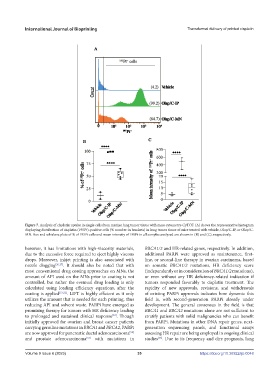
            Figure 7. Analysis of cisplatin uptake in single cells from murine lung tumor tissue with mass cytometry-CyTOF. (A) shows the representative histogram
            displaying distribution of cisplatin (195Pt)-positive cells (% number in brackets) in lung tumor tissue of mice treated with vehicle, Olap/C-IP, or Olap/C-
            MN. Box and whiskers plots of % of 195Pt cells and mean intensity of 195Pt in all samples analyzed are shown in (B) and (C), respectively.

            however, it has limitations with high-viscosity materials,   BRCA1/2 and HR-related genes, respectively. In addition,
            due to the excessive force required to eject highly viscous   additional PARPi were approved as maintenance, first-
            drops. Moreover, inkjet printing is also associated with   line, or second-line therapy in ovarian carcinoma, based
            nozzle clogging [26,27] . It should also be noted that with   on somatic  BRCA1/2 mutations, HR deficiency score
            most conventional drug coating approaches on MNs, the   (independently or in consideration of BRCA1/2 mutations),
            amount of API used on the MNs prior to coating is not   or  even  without  any  HR  deficiency-related  indication  if
            controlled, but rather the eventual drug loading is only   tumors responded favorably to cisplatin treatment. The
            calculated using loading efficiency equations, after the   rapidity of new approvals, revisions, and withdrawals
            coating is applied [51,52] . LIFT is highly efficient as it only   of existing PARPi approvals indicates how dynamic this
            utilizes the amount that is needed for each printing, thus   field  is,  with second-generation  PARPi already under
            reducing API and solvent waste. PARPi have emerged as   development. The  general consensus  in the  field  is  that
            promising therapy for tumors with HR deficiency leading   BRCA1 and BRCA2 mutations alone are not sufficient to
            to prolonged and sustained clinical response . Though   stratify patients with solid malignancies who can benefit
                                                 [53]
            initially approved for ovarian and breast cancer patients   from PARPi. Mutations in other DNA repair genes, next-
            carrying germline mutations in BRCA1 and BRCA2, PARPi   generation sequencing panels, and functional assays
            are now approved for pancreatic ductal adenocarcinoma    assessing HR repair are being employed in ongoing clinical
                                                        [54]
            and  prostate  adenocarcinoma   with  mutations  in   studies . Due to its frequency and dire prognosis, lung
                                                                    [56]
                                      [55]
            Volume 9 Issue 6 (2023)                         35                        https://doi.org/10.36922/ijb.0048

