


Page 105 - IJOCTA-15-3
P. 105
Application of Jumarie-Stancu collocation series method and multi-Step


                                 (a)                                                 (b)


                                 (c)                                                 (d)

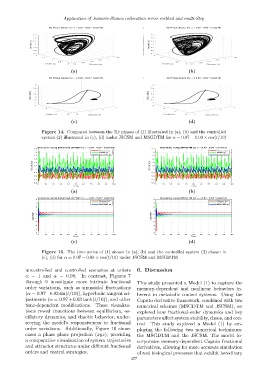
                    Figure 14. Compared between the 3D phases of (1) illustrated in (a), (b) and the controlled
                    system (2) illustrated in (c), (d) under JSCSM and MSGDTM for α = 0.97 − 0.03 × cos(t/10)

                  Dynamics using Enhanced LRPSM for    = 0.97 - 0.03 * cos(t/10)  Dynamics using MSGDTM for    = 0.97 - 0.03 * cos(t/10)
                2.2                                                 2.2
                                             Glucose (x)                                         Glucose (x)
                 2                           Insulin (y)             2                           Insulin (y)
                                             Beta-cells (z)                                      Beta-cells (z)
                1.8                                                 1.8
                1.6                                                 1.6
               Concentration  1.4                                   Concentration  1.4
                1.2
                                                                    1.2
                0.8 1                                               0.8 1
                0.6                                                 0.6
                0.4                                                 0.4
                0.2                                                 0.2
                  0  10  20  30  40  50  60  70  80  90  100          0  10  20  30  40  50  60  70  80  90  100
                                  Time                                                Time
                                 (a)                                                 (b)
                  Dynamics using Enhanced LRPSM for    = 0.97 - 0.03 * cos(t/10)  Dynamics using MSGDTM for    = 0.97 - 0.03 * cos(t/10)
                 4                                                   4
                                             Glucose (x)                                         Glucose (x)
                 3                           Insulin (y)             3                           Insulin (y)
                                             Beta-cells (z)                                      Beta-cells (z)
                 2                                                   2
                 1                                                   1
                Concentration  -1 0                                 Concentration  -1 0
                 -2                                                  -2
                 -3                                                  -3
                 -4                                                  -4
                 -5                                                  -5
                  0  10  20  30  40  50  60  70  80  90  100          0  10  20  30  40  50  60  70  80  90  100
                                  Time                                                Time
                                 (c)                                                 (d)
                    Figure 15. The time series of (1) shown in (a), (b) and the controlled system (2) shown in
                    (c), (d) for α = 0.97 − 0.03 × cos(t/10) under JSCSM and MSGDTM
            uncontrolled and controlled scenarios at orders   6. Discussion
            α = 1 and α = 0.98. In contrast, Figures 7
            through 9 investigate more intricate fractional   This study presented a Model (1) to capture the
            order variations, such as sinusoidal fluctuations  memory-dependent and nonlinear behaviors in-
            (α = 0.97−0.03 sin(t/10)), hyperbolic tangent ad-  herent in metabolic control systems. Using the
            justments (α = 0.97+0.03 tanh(t/10)), and other   Caputo derivative framework, combined with two
            time-dependent modifications. These visualiza-    numerical schemes (MSGDTM and JSCSM), we
            tions reveal transitions between equilibrium, os-  explored how fractional-order dynamics and key
            cillatory dynamics, and chaotic behavior, under-  parameters affect system stability, chaos, and con-
            scoring the model’s responsiveness to fractional  trol. This study explored a Model (1) by em-
            order variations. Additionally, Figure 10 show-   ploying the following two numerical techniques:
            cases a phase plane projection (xyz), providing   the MSGDTM and the JSCSM. The model in-
            a comparative visualization of system trajectories  corporates memory-dependent Caputo fractional
            and attractor structures under different fractional  derivatives, allowing for more accurate simulation
            orders and control strategies.                    of real biological processes that exhibit hereditary
                                                           477

