


Page 50 - IJOCTA-15-3
P. 50
M. Aychluh et.al. / IJOCTA, Vol.15, No.3, pp.407-425 (2025)
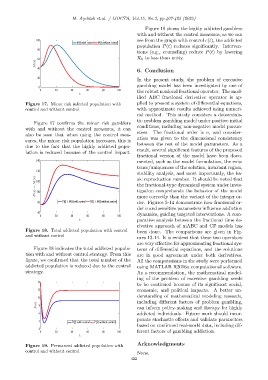
                                                                  Figure 19 shows the highly addicted gamblers
                                                              with and without the control measures, as we can
                 100                                          see from the graph with control c(t), the addicted
                                   M(t) with control  M(t) without control
                                                              population P(t) reduces significantly. Interven-
                  80
                                                              tions (e.g., counseling) reduce P(t) by lowering
                                                              R 0 to less than unity.
                  60
                 M (t)
                  40
                                                              6. Conclusion
                  20
                                                              In the present study, the problem of excessive
                                                              gambling model has been investigated by one of
                  0
                   0      20    40     60     80     100      the robust nonlocal fractional operator. The mod-
                                    t
                                                              ified ABC fractional derivative operator is ap-
            Figure 17. Minor risk infected population with    plied to present a system of differential equations,
            control and without control                       with approximate results achieved using numeri-
                                                              cal method. This study considers a determinis-
                                                              tic problem gambling model under positive initial
                Figure 17 confirms the minor risk gamblers
                                                              conditions, including non-negative model param-
            with and without the control measures, it can
                                                              eters. The fractional order is υ, and consider-
            also be seen that when using the control mea-
                                                              ation was given to the dimensional consistency
            sures, the minor risk population increases, this is
                                                              between the rest of the model parameters. As a
            due to the fact that the highly addicted popu-
                                                              result, several significant features of the proposed
            lation is reduced because of the control impact.
                                                              fractional version of the model have been docu-
                 140                                          mented, such as the model formulation, the exis-
                                                              tence/uniqueness of the solution, invariant region,
                 120
                                                              stability analysis, and most importantly, the ba-
                 P (t) + M (t)  100                           the fractional-type dynamical system under inves-
                                                              sic reproduction number. It should be noted that
                                                              tigation comprehends the behavior of the model
                  80

                                                              der. Figures 5-14 demonstrate how fractional or-
                  60         P(t)+M(t) with control  P(t)+M(t) without control  more correctly than the variant of the integer or-
                                                              der υ and sensitive parameters influence addiction
                  40
                   0      20    40     60     80     100      dynamics, guiding targeted interventions. A com-
                                    t                         parative analysis between the fractional time de-
                                                              rivative approach of mABC and CF models has
            Figure 18. Total addicted population with control  been done. The comparisons are given in Fig-
            and without control
                                                              ures 13-14. It is evident that these two operators
                                                              are very effective for approximating fractional sys-
                Figure 18 indicates the total addicted popula-  tems of differential equations, and the solutions
            tion with and without control strategy. From this  are in good agreement under both derivatives.
            figure, we confirmed that the total number of the  All the computations in the study were performed
            addicted population is reduced due to the control  using MATLAB R2016a computational software.
            strategy.                                         As a recommendation, the mathematical model-
                                                              ing of the problem of excessive gambling needs
                  14
                                                              to be continued because of its significant social,
                  12                                          economic, and political impacts. A better un-
                                                              derstanding of mathematical modeling research,
                  10
                 P (t)  8                                     including different factors of problem gambling,
                                                              can inform policy-making and therapy for highly
                  6                                           addicted individuals. Future work should incor-
                                                              porate stochastic effects and validate parameters
                  4              P(t) with control  P(t) without control
                                                              based on confirmed real-world data, including dif-
                  2
                   0      20    40     60     80     100      ferent factors of gambling addiction.
                                    t
                                                              Acknowledgments
            Figure 19. Permanent addicted population with
            control and without control
                                                              None.
                                                           422

