


Page 49 - IJOCTA-15-3
P. 49
Modeling and analysis of the dynamics of an excessive gambling problem with modified fractional operator

                  16
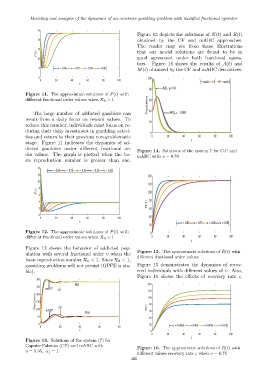
                                                              Figure 13 depicts the solutions of N(t) and R(t)
                  14                                          obtained by the CF and mABC approaches.
                                                              The reader may see from these illustrations
                  12
                 P (t)                                        that our model solutions are found to be in
                  10                                          good agreement under both fractional opera-
                                                              tors. Figure 14 shows the results of A(t) and
                  8        υ = 0.65  υ = 0.75  υ = 0.85  υ = 0.95
                                                              M(t) obtained by the CF and mABC derivatives.
                  6                                                100
                   0      20    40     60     80     100                                   mABC CF CF mABC
                                    t
                                                                   80    A(t), ℘ = 0.1
            Figure 11. The approximate solutions of P(t) with
                                                                  Population
            different fractional order values when R 0 > 1         60

                The large number of addicted gamblers can          40        M(t),ς = 0.005
            result from a daily focus on reward values. To
                                                                   20
            reduce this number, individuals must focus on re-
            ducing their daily investment in gambling activi-
                                                                    0
            ties and return to their previous non-problematic       0      20     40     60     80     100
                                                                                      t
            stage. Figure 11 indicates the dynamics of ad-
            dicted gamblers under different fractional or-
                                                              Figure 14. Solutions of the system 7 for C-F and
            der values. The graph is plotted when the ba-
                                                              mABC with υ = 0.70
            sic reproduction number is greater than one.
                  14
                        υ = 0.95  υ = 0.75  υ = 0.55  υ = 0.35  υ = 0.15
                  12                                               140
                  10
                                                                   120
                 P (t)  8                                          100
                  6
                                                                  R(t)
                  4                                                80
                  2                                                60
                  0
                   0      20    40     60     80     100           40
                                    t                                            υ = 0.65  υ = 0.75  υ = 0.85  υ = 0.95
                                                                   20
            Figure 12. The approximate solutions of P(t) with       0
            different fractional order values when R 0 < 1          0      20     40     60     80     100
                                                                                      t
            Figure 12 shows the behavior of addicted pop-
                                                              Figure 15. The approximate solutions of R(t) with
            ulation with several fractional order υ when the
                                                              different fractional order values
            basic reproduction number R 0 < 1. Since R 0 < 1,
            gambling problems will not persist (GPFE is sta-  Figure 15 demonstrates the dynamics of recov-
            ble).                                             ered individuals with different values of υ. Also,
                                                              Figure 16 shows the effects of recovery rate ς.
                 300
                                  R(t)                             140
                 250
                     mABC
                           CF                                      120
                 200
                 Population  150                                   100
                                                                   80
                           CF
                 100
                     mABC
                                       N(t)                       R(t)  60
                  50
                                                                   40
                  0                                                20         ς = 0.0025  ς = 0.005  ς = 0.0075  ς = 0.015
                   0       20       40       60      80
                                    t                               0
                                                                    0      20     40     60     80     100
                                                                                      t
            Figure 13. Solutions of the system (7) for
            Caputo–Fabrizio (CF) and mABC with
                                                              Figure 16. The approximate solutions of R(t) with
            υ = 0.35, α 1 = 1
                                                              different values recovery rate ς when υ = 0.75
                                                           421

