


Page 58 - IJPS-1-1
P. 58
Earlier and more rapid ageing: Does nutrition contribute?


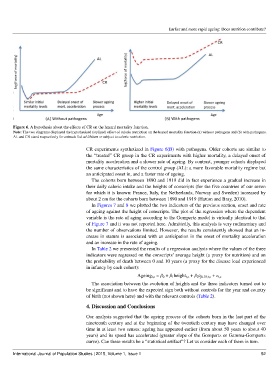
       Figure 6. A hypothesis about the effects of CR on the hazard mortality function.
       Note: The two diagrams displayed the hypothesized (stylized) effect of calorie restriction on the hazard mortality function (a) without pathogens and (b) with pathogens.
       AL and CR stand respectively for animals fed ad libitum or subject to caloric restriction.

                                      CR experiments synthetized in Figure 6(B) with pathogens. Older cohorts are similar to
                                      the “treated” CR group in the CR experiments with higher mortality, a delayed onset of
                                      mortality acceleration and a slower rate of ageing. By contrast, younger cohorts displayed
                                      the same characteristics of the control group (AL): a more favorable mortality regime but
                                      an anticipated onset in, and a faster rate of ageing.
                                        The cohorts born between 1890 and 1919 did in fact experience a gradual increase in
                                      their daily caloric intake and the heights of conscripts (for the five countries of our seven
                                      for which it is known: France, Italy, the Netherlands, Norway and Sweden) increased by
                                      about 2 cm for the cohorts born between 1890 and 1919 (Hatton and Bray, 2010).
                                        In Figures 7 and 8 we plotted the two indicators of the previous section, onset and rate
                                      of ageing against the height of conscripts. The plot of the regression where the dependent
                                      variable is the rate of aging according to the Gompertz model is virtually identical to that
                                      of Figure 7 and it was not reported here. Admittedly, this analysis is very rudimentary and
                                      the number of observations limited. However, the results consistently showed that an in-
                                      crease in stature is associated with an anticipation in the onset of mortality acceleration
                                      and an increase in the rate of ageing.
                                        In Table 2 we presented the results of a regression analysis where the values of the three
                                      indicators were regressed on the conscripts’ average height (a proxy for nutrition) and on
                                      the probability of death between 0 and 10 years (a proxy for the disease load experienced
                                      in infancy by each cohort):
                                                            Ageing t,c = β 0 + β 1height t,c + β 2q 0-10,t,c + ε t,c
                                        The association between the evolution of heights and the three indicators turned out to
                                      be significant and to have the expected sign both without controls for the year and country
                                      of birth (not shown here) and with the relevant controls (Table 2).
                                      4. Discussion and Conclusions

                                      Our analysis suggested that the ageing process of the cohorts born in the last part of the
                                      nineteenth century and at the beginning of the twentieth century may have changed over
                                      time in at least two senses: ageing has appeared earlier (from about 50 years to about 40
                                      years) and its speed has accelerated (greater slope of the Gompertz or Gamma-Gompertz
                                      curve). Can these results be a “statistical artifact”? Let us consider each of them in turn.

       International Journal of Population Studies | 2015, Volume 1, Issue 1                                    52

