


Page 69 - IJPS-1-1
P. 69
Raphael J. Nawrotzki, Fernando Riosmena, Lori M. Hunter, and Daniel M. Runfola


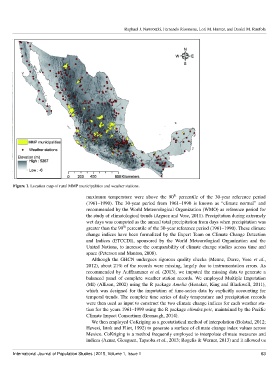
       Figure 1. Location map of rural MMP municipalities and weather stations.

                                                                           th
                                      maximum temperature were above the 90   percentile of the 30-year reference period
                                      (1961–1990). The 30-year period from  1961–1990 is known as “climate normal” and
                                      recommended by the World Meteorological Organization (WMO) as reference period for
                                      the study of climatological trends (Arguez and Vose, 2011). Precipitation during extremely
                                      wet days was computed as the annual total precipitation from days when precipitation was
                                                      th
                                      greater than the 99  percentile of the 30-year reference period (1961–1990). These climate
                                      change indices have been formalized by the Expert Team on Climate Change Detection
                                      and  Indices (ETCCDI),  sponsored by  the  World  Meteorological Organization  and  the
                                      United Nations, to increase the comparability of climate change studies across time and
                                      space (Peterson and Manton, 2008).
                                        Although the  GHCN undergoes  rigorous quality  checks  (Menne, Durre, Vose  et al.,
                                      2012), about 21% of the records were missing, largely due to instrumentation errors. As
                                      recommended by Auffhammer et al. (2013), we imputed the missing data to generate a
                                      balanced panel of complete  weather station records.  We employed Multiple Imputation
                                      (MI) (Allison, 2002) using the R package Amelia (Honaker, King and Blackwell, 2011),
                                      which  was  designed for the imputation of time-series data by  explicitly  accounting  for
                                      temporal trends. The complete time series of daily temperature and precipitation records
                                      were then used as input to construct the two climate change indices for each weather sta-
                                      tion for the years 1961–1999 using the R package climdex.pcic, maintained by the Pacific
                                      Climate Impact Consortium (Bronaugh, 2014).
                                        We then employed CoKriging as a geostatistical method of interpolation (Bolstad, 2012;
                                      Hevesi, Istok and Flint, 1992) to generate a surface of climate change index values across
                                      Mexico. CoKriging is a method frequently employed to interpolate climate measures and
                                      indices (Aznar, Gloaguen, Tapsoba et al., 2013; Rogelis & Werner, 2013) and it allowed us

       International Journal of Population Studies | 2015, Volume 1, Issue 1                                    63

