


Page 57 - IMO-2-3
P. 57
Innovative Medicines & Omics                                              Biocompatibility of nanomaterials


                                                               biocompatibility. In cell culture studies using osteoblasts,
                                                               these scaffolds supported healthy cell growth, attachment,
                                                               and differentiation, with minimal toxicity. The controlled
                                                               release of calcium and phosphate ions also encouraged
                                                               robust matrix mineralization. 42

                                                                 These findings were backed by in vivo experiments in
                                                               rodent models, where CaO–CaP scaffolds were implanted
                                                               into critical-size bone defects. Tissue analysis showed
                                                               strong  new bone formation, seamless integration  with
                                                               host tissue, and tight bonding at the interface. Compared
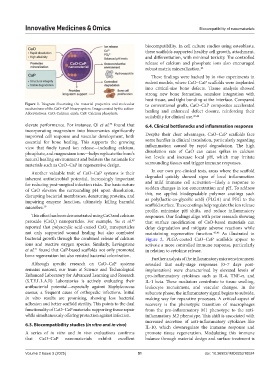
            Figure  1. Diagram illustrating the material properties and molecular   to conventional grafts, CaO–CaP composites accelerated
            mechanisms of the CaO–CaP binary system. Image created by the author.  healing and enhanced defect closure, reinforcing their
            Abbreviations: CaO: Calcium oxide; CaP: Calcium phosphate.
                                                               suitability for clinical use. 43,44
                                                38
            elevate performance. For instance, Qi  et al.  found that   6.4. Clinical bottlenecks and inflammation response
            incorporating magnesium into bioceramics significantly
            improved cell response and vascular development, both   Despite their clear advantages, CaO–CaP scaffolds face
            essential for bone healing. This supports the growing   some hurdles in clinical translation, particularly regarding
            view  that finely tuned  ion release—including  calcium,   inflammation caused by  rapid  degradation. The  high
            phosphate, and magnesium ions—helps replicate the bone’s   dissolution rate of CaO can cause spikes in calcium
            natural healing environment and bolsters the rationale for   ion levels and increase local pH, which may irritate
            materials such as CaO–CaP in regenerative design.  surrounding tissues and trigger immune responses.
              Another valuable  trait of CaO–CaP systems is their   In our own pre-clinical tests, areas where the scaffold
            inherent antimicrobial potential, increasingly important   degraded quickly showed  signs  of local inflammation
            for reducing post-surgical infection risks. The basic nature   and  mild  immune  cell  activation—likely  a  response  to
            of CaO elevates the surrounding pH upon dissolution,   sudden changes in ion concentration and pH. To address
            disrupting bacterial membranes, denaturing proteins, and   this,  we applied biodegradable  polymer  coatings  such
            impairing enzyme function, ultimately killing harmful   as poly(lactic-co-glycolic acid) (PLGA) and PEG to the
            microbes. 39                                       scaffold surface. These coatings help regulate the ion release
                                                               profile, minimize pH shifts, and reduce inflammatory
              This effect has been demonstrated using CaO and calcium   responses. Our findings align with prior research showing
            peroxide (CaO ) nanoparticles. For example, Yu  et  al.    that surface modification of CaO-based materials can
                                                         40
                        2
            reported that polyacrylic acid-coated CaO  nanoparticles   delay degradation and mitigate adverse reactions while
                                              2
            not  only  supported  wound  healing  but  also  combated   maintaining regenerative function. 45,46  As illustrated in
            bacterial growth through the combined release of calcium   Figure  2, PLGA-coated CaO–CaP scaffolds appear to
            ions and reactive oxygen species. Similarly, Levingstone   activate a more controlled immune response, particularly
            et al.  found that CaP-based scaffolds not only promoted   in relation to cytokine release.
                41
            bone regeneration but also resisted bacterial colonization.
                                                                 Further analysis of the inflammatory microenvironment
              Although  specific  research  on  CaO–CaP  systems   revealed that early-stage responses (0–7  days post-
            remains nascent, our team at Science and Technological   implantation) were characterized by elevated levels of
            Enhanced Laboratory for Advanced Learning and Research   pro-inflammatory cytokines such as IL-6, TNF-α, and
            (S.T.E.L.L.A.R) Laboratories is actively evaluating their   IL-1 beta. These mediators contribute to tissue swelling,
            antibacterial  potential—especially  against  Staphylococcus   leukocyte recruitment, and vascular changes. In the
            aureus, a frequent cause of orthopedic infections. Initial   subacute phase, the inflammatory signal begins to subside,
            in vitro results are promising, showing less bacterial   making way for reparative processes. A critical aspect of
            adhesion and better scaffold sterility. This points to the dual   recovery is  the  phenotypic transition  of macrophages
            functionality of CaO–CaP materials: supporting tissue repair   from the pro-inflammatory M1 phenotype to the anti-
            while simultaneously offering protection against infection.  inflammatory M2 phenotype. This shift is associated with
                                                               increased secretion of anti-inflammatory cytokines like
            6.3. Biocompatibility studies (in vitro and in vivo)
                                                               IL-10,  which  downregulate the  immune  response  and
            A series of  in vitro and  in vivo evaluations confirms   promote tissue regeneration. Modulating this immune
            that  CaO–CaP    nanomaterials  exhibit  excellent  balance through material design and surface treatment is


            Volume 2 Issue 3 (2025)                         51                          doi: 10.36922/IMO025210024

