


Page 11 - ITPS-5-2
P. 11
5    INNOSC Theranostics and Pharmacological Sciences, 2022, Vol. 5, No. 2                   Dhokne et al.

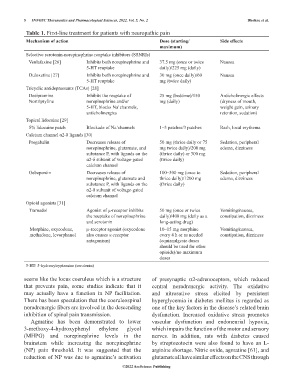
            Table 1. First-line treatment for patients with neuropathic pain
            Mechanism of action                                     Dose (starting/          Side effects
                                                                    maximum)
            Selective serotonin-norepinephrine reuptake inhibitors (SSNRIs)
             Venlafaxine [26]        Inhibits both norepinephrine and   37.5 mg (once or twice   Nausea
                                     5-HT reuptake                  daily)/225 mg (daily)
             Duloxetine [27]         Inhibits both norepinephrine and   30 mg (once daily)/60    Nausea
                                     5-HT reuptake                  mg (twice daily)
            Tricyclic antidepressants (TCAs) [28]
             Desipramine             Inhibits the reuptake of       25 mg (bedtime)/150      Anticholinergic effects
             Nortriptyline           norepinephrine and/or          mg (daily)               (dryness of mouth,
                                     5-HT, blocks Na channels,                               weight gain, urinary
                                                  +
                                     anticholinergics                                        retention, sedation)
            Topical lidocaine [29]
             5% lidocaine patch      Blockade of Na channels        1–3 patches/3 patches    Rash, local erythema
                                                  +
            Calcium channel α2-δ ligands [30]
             Pregabalin              Decreases release of           50 mg (thrice daily or 75   Sedation, peripheral
                                     norepinephrine, glutamate, and   mg twice daily)/200 mg   edema, dizziness
                                     substance P, with ligands on the   (thrice daily) or 300 mg
                                     α2-δ subunit of voltage-gated   (twice daily)
                                     calcium channel
             Gabapentin              Decreases release of           100–300 mg (once to      Sedation, peripheral
                                     norepinephrine, glutamate and   thrice daily)/1200 mg   edema, dizziness
                                     substance P, with ligands on the   (thrice daily)
                                     α2-δ subunit of voltage-gated
                                     calcium channel
            Opioid agonists [31]
             Tramadol                Agonist of μ-receptor inhibits   50 mg (once or twice   Vomiting/nausea,
                                     the reuptake of norepinephrine   daily)/400 mg (daily as a   constipation, dizziness
                                     and serotonin                  long-acting drug)
             Morphine, oxycodone,    μ-receptor agonist (oxycodone   10–15 mg morphine       Vomiting/nausea,
              methadone, levorphanol  also causes κ-receptor        every 4 h or as needed   constipation, dizziness
                                     antagonism)                    (equianalgesic doses
                                                                    should be used for other
                                                                    opioids)/no maximum
                                                                    doses
            5-HT: 5-hydroxytryptamine (serotonin)


           seems like the locus coeruleus which is a structure   of presynaptic  α2-adrenoceptors, which reduced
           that  prevents pain, some studies indicate  that  it   central  noradrenergic  activity.  The  oxidative
           may  actually  have  a function  in NP facilitation.   and nitrosative stress elicited  by persistent
           There has been speculation that the coeruleospinal   hyperglycemia in diabetes mellitus is regarded as
           noradrenergic fibers are involved in the descending   one of the key factors in the disease’s related brain
           inhibition of spinal pain transmission.              dysfunction.  Increased  oxidative  stress promotes
              Agmatine  has been demonstrated  to lower         vascular dysfunction and endoneurial hypoxia,
           3-methoxy-4-hydroxyphenyl      ethylene    glycol    which impairs the function of the motor and sensory
           (MHPG) and  norepinephrine  levels  in  the          nerves. In addition,  rats with diabetes  caused
           brainstem while increasing the norepinephrine        by streptozotocin were also found to have an L-
           (NP)  pain threshold. It was suggested that the      arginine shortage. Nitric oxide, agmatine [61], and
           reduction of NP was due to agmatine’s activation     glutamate all have similar effects on the CNS through

                                                    ©2022 AccScience Publishing

