


Page 101 - ITPS-8-3
P. 101
INNOSC Theranostics and
            Pharmacological Sciences                                       Biomarkers for early heart risks in pre-eclampsia


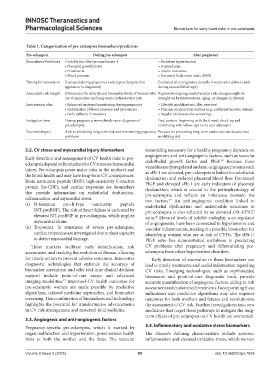
            Table 1. Categorization of pre‑eclampsia biomarkers/predictors
            Pre‑eclampsia                During pre‑eclampsia                      After pregnancy
            Biomarkers/Predictors  • Soluble fms‑like tyrosine kinase‑1  • Persistent hypertension
                             • Placental growth factor              • Dyslipidemia
                             • Proteinuria                          • Insulin resistance
                             • Blood pressure                       • Increased body mass index (BMI)
            Timing for assessment  Evaluated during pregnancy (when preeclampsia first   Evaluated after pregnancy (usually 6 weeks after delivery and
                             appears or is diagnosed)               during annual follow-ups)
            Associated risk insight  Determines the severity and biomarker levels of women who  Represents ongoing cardiovascular risk; changes might be
                             are at immediate and long-term cardiovascular risk  brought on by interventions, aging, or changes in lifestyle
            Intervention plan  • Enhanced maternal monitoring during pregnancy  • Lifestyle modifications (diet, exercise)
                             • Stabilization of blood pressure and proteinuria  • Pharmacological intervention (e.g., antihypertensives, statins)
                             • Early delivery if necessary          • Regular cardiovascular screenings
            Instigation time  During pregnancy, immediately upon diagnosis of   Post-partum, beginning with the 6-week check-up and
                             preeclampsia                           continuing with follow-ups every year afterward
            Potential impact  Aids in predicting long-term risk and minimizing pregnancy  Focuses on preventing long-term cardiovascular disease and
                             problems                               modifying risk

            3.2. CV stress and myocardial injury biomarkers    remodeling necessary for a healthy pregnancy depends on
                                                               angiogenesis and anti-angiogenic factors, such as vascular
            Early detection and management of CV health risks in pre-                          18
            eclampsia depend on biomarkers for CV stress and myocardial   endothelial growth factor and PlGF.  Because these
                                                               variables are dysregulated and anti-angiogenic proteins such
            injury. Pre-eclampsia poses major risks to the mother’s and   as sFlt-1 are elevated, pre-eclampsia is linked to endothelial
            the fetus’s health and may have long-term CV consequences.   dysfunction and reduced placental blood flow. Decreased
            Brain natriuretic peptide (BNP), high-sensitivity C-reactive   PlGF and elevated sFlt-1 are early indicators of placental
            protein (hs-CRP), and cardiac troponins are biomarkers   dysfunction, which is crucial to the pathophysiology of
            that provide information on endothelial dysfunction,   pre-eclampsia  and reflects an imbalance between the
            inflammation, and myocardial stress.               two factors.  An anti-angiogenic condition linked to
                                                                         19
            (i)  N-terminal  pro-B-type  natriuretic  peptide  endothelial dysfunction and unfavorable outcomes in
               (NT-proBNP). The risk of heart failure is indicated by   pre-eclampsia is also reflected by an elevated sFlt-1/PlGF
               elevated NT-proBNP in pre-eclampsia, which implies   ratio.  Elevated levels of soluble endoglin, a co-regulator
                                                                   20
               myocardial strain.                              of angiogenesis, have been connected to hypertension and
            (ii)  Troponins. In situations of severe pre-eclampsia,   vascular inflammation, making it a possible biomarker for
               cardiac troponins are investigated due to their capacity   identifying women who are at risk of CVDs. The sFlt-1/
               to detect myocardial damage.                    PlGF ratio has demonstrated usefulness in predicting
              These markers facilitate early identification, risk   CV problems after pregnancy and differentiating pre-
            assessment, and tracking the evolution of disease, allowing   eclampsia from other hypertensive disorders.
            for timely action to prevent adverse outcomes. Innovative   Early detection of anomalies in these biomarkers can
            diagnostic technologies that enhance the accuracy of   lead to timely treatments and useful information regarding
            biomarker assessment and offer real-time clinical decision   CV risks. Emerging technologies, such as sophisticated
            support include point-of-care assays and advanced   biosensors and point-of-care diagnostic tools, provide
            imaging modalities.  Improved CV health outcomes for   accurate quantification of angiogenic factors, aiding in risk
                            17
            pre-eclamptic women are made possible by predictive   assessment and customized treatments. Incorporating these
            algorithms, tailored medicine approaches, and biomarker   indications into predictive algorithms may also improve
            screening. This combination of biomarkers and technology   outcomes for both mothers and fetuses and revolutionize
            highlights the potential for transformative advancements   the assessment of CV risk. Further investigations into new
            in CV risk management and maternal-fetal medicine.  medicines that target these pathways to mitigate the long-
                                                               term effects of pre-eclampsia on CV health are warranted.
            3.3. Angiogenic and anti-angiogenic factors
            Pregnancy-specific pre-eclampsia, which is marked by   3.4. Inflammatory and oxidative stress biomarkers
            organ malfunction and hypertension, poses serious health   The  disease’s  defining  characteristics  include  systemic
            risks to both the mother and the fetus. The vascular   inflammation and elevated oxidative stress, which worsen


            Volume 8 Issue 3 (2025)                         95                               doi: 10.36922/itps.7839

