


Page 154 - JCAU-6-2
P. 154
Journal of Chinese
            Architecture and Urbanism                                           RuiXue Multi-Hall in reciprocal structures


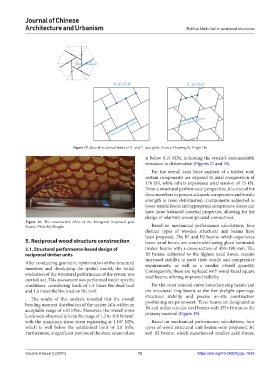
                                Figure 15. Special reciprocal states of B- and C-type grids. Source: Drawing by Yingzi Hu

                                                               is below 0.15 MPa, indicating the system’s commendable
                                                               resistance to deformation (Figures 17 and 18).
                                                                 For the overall axial force analysis of a timber roof,
                                                               certain components are exposed to axial compression of
                                                               170 kN, while others experience axial tension of 75 kN.
                                                               From a structural performance perspective, it is crucial for
                                                               these members to possess adequate compressive and tensile
                                                               strength to resist deformation. Components subjected to
                                                               lower tensile forces and appropriate compressive forces can
                                                               have more balanced material properties, allowing for the
                                                               design of relatively uncomplicated connections.
            Figure  16. The construction effect of the hexagonal reciprocal grid.
            Source: Photo by Wongke                              Based on mechanical performance calculations, four
                                                               distinct types of wooden structural unit beams have
                                                               been proposed. The B1 and B2 beams, which experience
            5. Reciprocal wood structure construction          lesser axial forces, are constructed using glued laminated
            5.1. Structural performance-based design of        timber beams with a cross-section of 450×180 mm. The
            reciprocal timber units                            B3 beams, subjected to the highest axial forces, require
                                                               increased stability to meet their tensile and compressive
            After conducting geometric optimization of the structural   requirements, as well as a smaller overall quantity.
            members and developing the spatial model, the initial   Consequently, these are replaced with wood-faced square
            evaluation of the structural performance of the system was   steel beams, offering improved stability.
            carried out. This assessment was performed under specific
            conditions, considering loads of 1.3 times the dead load   For the outer rational curve boundary ring beams and
            and 1.5 times the live load on the roof.           the structural ring beams at the five skylight openings,
                                                               structural stability and precise on-site construction
              The  results of  this  analysis revealed that  the  overall
            bending moment distribution of the system falls within an   positioning are paramount. These beams are designated as
                                                               B4 and utilize circular steel beams with 355×16 mm as the
            acceptable range of ±20 kNm. Moreover, the overall stress   primary material (Figure 19).
            levels were observed to be in the range of 1.2 to -0.9 N/mm ,
                                                         2
            with the maximum shear stress registering at 1.197 MPa,   Based on mechanical performance calculations, four
            which is well below the established limit of 2.0 MPa.   types of wood structural unit beams were proposed. B1
            Furthermore, a significant portion of the shear stress values   and B2 beams, which experienced smaller axial forces,


            Volume 6 Issue 2 (2024)                         12                       https://doi.org/10.36922/jcau.1635

