


Page 98 - JCAU-6-2
P. 98
Journal of Chinese
            Architecture and Urbanism                                             Residential urban heritage space study


                         A                                  B


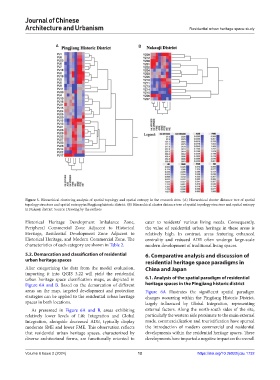
            Figure 5. Hierarchical clustering analysis of spatial topology and spatial entropy in the research sites. (A) Hierarchical cluster distance tree of spatial
            topology structure and spatial entropy in Pingjiang historic district. (B) Hierarchical cluster distance tree of spatial topology structure and spatial entropy
            in Nakauji district. Source: Drawing by the authors

            Historical Heritage Development Imbalance Zone,    cater to residents’ various living needs. Consequently,
            Peripheral Commercial Zone Adjacent to Historical   the value of residential urban heritage in these areas is
            Heritage, Residential Development Zone Adjacent to   relatively high.  In  contrast,  areas  featuring  enhanced
            Historical Heritage, and Modern Commercial Zone. The   centrality and reduced ADE often undergo large-scale
            characteristics of each category are shown in Table 2.  modern development of traditional living spaces.

            5.2. Demarcation and classification of residential   6. Comparative analysis and discussion of
            urban heritage spaces                              residential heritage space paradigms in
            After categorizing the data from the model evaluation,   China and Japan
            importing it into QGIS 3.22 will yield the residential
            urban  heritage  space  classification  maps,  as  depicted  in   6.1. Analysis of the spatial paradigm of residential
            Figure 6A and B. Based on the demarcation of different   heritage spaces in the Pingjiang historic district
            areas on the map, targeted development and protection   Figure  6A illustrates the significant spatial paradigm
            strategies can be applied to the residential urban heritage   changes occurring within the Pingjiang Historic District,
            spaces in both locations.                          largely influenced by Global Integration, representing

              As presented in  Figure  6A and  B, areas exhibiting   external factors. Along the north-south sides of the site,
            relatively lower levels of Life Integration and Global   particularly the western side proximate to the main external
            Integration, alongside decreased ADE, typically display   roads, commercialization and touristification have spurred
            moderate SME and lower FME. This observation reflects   the  introduction  of  modern commercial and  residential
            that residential urban heritage spaces, characterized by   developments within the residential heritage spaces. These
            diverse architectural forms, are functionally oriented to   developments have imparted a negative impact on the overall


            Volume 6 Issue 2 (2024)                         12                       https://doi.org/10.36922/jcau.1732

