


Page 36 - JCAU-7-2
P. 36
Journal of Chinese
            Architecture and Urbanism                                       Moisture damage in plastered heritage building


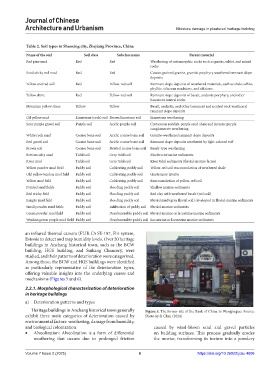
            Table 2. Soil types in Shaoxing city, Zhejiang Province, China
            Name of the soil         Soil class    Subclass name                  Parent material
            Red pine mud         Red            Red              Weathering of metamorphic rocks such as gneiss, schist, and mixed
                                                                 rocks
            Sand sticky red mud  Red            Red              Coarse-grained granite, granitic porphyry weathered remnant slope
                                                                 deposits
            Yellow and red soil  Red            Yellow-red soil  Remnant slope deposits of weathered materials, such as shale, schist,
                                                                 phyllite, siliceous mudstone, and siltstone.
            Yellow slime         Red            Yellow-red soil  Remnant slope deposits of basalt, andesite porphyry, and other
                                                                 basement neutral rocks
            Mountain yellow slime  Yellow       Yellow           Basalt, andesite, and other basement and neutral rock weathered
                                                                 remnant slope deposits
            Oil yellow mud       Limestone (rock) soil Brown limestone soil  Limestone weathering
            Sour purple gravel soil  Purple soil  Acidic purple soil  Cretaceous reddish-purple sand shale and Jurassic purple
                                                                 conglomerate weathering
            White rock sand      Coarse bone soil  Acidic coarse bone soil  Granite-weathered remnant slope deposits
            Red gravel soil      Coarse bone soil  Acidic coarse bone soil  Remnant slope deposits weathered by light-colored tuff
            Brown soil           Coarse bone soil  Neutral coarse bone soil  Basalt-type weathering
            Bottom salty sand    Tidal soil     Gray tidal soil  Modern estuarine sediments
            River mud            Tidal soil     Gray tidal soil  River tidal sediments (fluvial-marine facies)
            Yellow powder mud field  Paddy soil  Cultivating paddy soil  Yellow-red soil reaccumulation of weathered shale
            Old yellow tendon mud field  Paddy soil  Cultivating paddy soil  Quaternary laterite
            Yellow mud field     Paddy soil     Cultivating paddy soil  Reaccumulation of yellow-red soil
            Painted sand fields  Paddy soil     Flooding paddy soil  Shallow marine sediments
            Red sticky field     Paddy soil     Flooding paddy soil  Red clay with weathered basalt (red soil)
            Jiangtu mud field    Paddy soil     Flooding paddy soil  Fluvial mud (gray fluvial soil) developed in fluvial-marine sediments
            Small powder mud fields  Paddy soil  Infiltration of paddy soil  Fluvial-marine sediments
            Green powder mud field  Paddy soil  Desubmersible paddy soil Fluvial-marine or lacustrine marine sediments
            Wushan green purple mud field Paddy soil  Desubmersible paddy soil Lacustrine or lacustrine marine sediments

            an infrared thermal camera (FLIR C5 SE-187, Flir system,
            Estonia to detect and map humidity levels. Over 20 heritage
            buildings in Anchang historical town, such as the BCW
            building, HGS building, and Suikang Chancery, were
            studied, and their patterns of deterioration were categorized.
            Among these, the BCW and HGS buildings were identified
            as particularly representative of the deterioration types,
            offering valuable insights into the underlying causes and
            mechanisms (Figures 5 and 6).

            2.2.1. Morphological characterization of deterioration
            in heritage buildings
            a)  Deterioration patterns and types

              Heritage buildings in Anchang historical town generally   Figure 5. The former site of the Bank of China in Wangjiaqiao. Source:
            exhibit  three  main  categories  of  deterioration  caused  by   Photo by Si Chen (2024)
            environmental factors: weathering, damage from humidity,
            and biological colonization.                          caused by  wind-blown  sand and  gravel  particles
            •   Alveolization: Alveolization is a form of differential   on building surfaces. This process gradually erodes
               weathering that occurs due to prolonged friction   the mortar, transforming its texture into a powdery


            Volume 7 Issue 2 (2025)                         6                        https://doi.org/10.36922/jcau.4606

