


Page 37 - JCAU-7-2
P. 37
Journal of Chinese
            Architecture and Urbanism                                       Moisture damage in plastered heritage building


                                                               2.2.2. Assessment of degradation levels in heritage
                                                               buildings
                                                               Following in-depth field research, a comprehensive and
                                                               detailed assessment of degradation levels in heritage
                                                               buildings within Anchang historical town was carried
                                                               out. The research team employed various assessment
                                                               methods,  such as  visual  inspections,  surveys,  moisture
                                                               measurements,  and  infrared  testing,  to  quantitatively
                                                               classify the extent of building deterioration. Four classes
                                                               of deterioration were identified: extremely serious, very
                                                               serious, generally serious, and slightly serious.
                                                                 Using the riverside façade of the BCW building as a
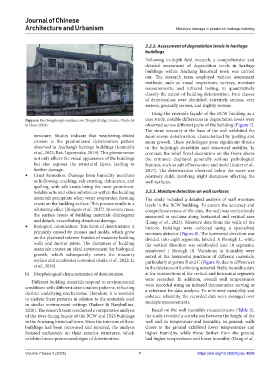
            Figure 6. He Gongsheng’s residence on Temple Bridge. Source: Photo by   case study, notable differences in degradation levels were
            Si Chen (2024)                                     observed across different parts of the building (Figure 7).
                                                               The stone masonry at the base of the wall exhibited the
               structure. Studies indicate that weathering-related   most severe deterioration, characterized by peeling and
               erosion is the predominant deterioration pattern   moss growth. These pathologies pose significant threats
               observed in Anchang’s heritage buildings (Ioannidis   to the building’s durability and structural stability. In
               et al., 2022; Rek-Lipczynska, 2019). This phenomenon   contrast, the relief floral decoration on the frieze above
               not only affects the visual appearance of the buildings   the entrance displayed generally serious pathological
               but also exposes the structural layers, leading to   features, such as salt efflorescence and mold (Junier et al.,
               further damage.                                 2017). The deterioration observed below the eaves was
            •   Crust formation:  Damage from humidity manifests   relatively mild, involving slight dampness affecting the
               as hollowing, cracking, salt crusting, dehiscence, and   wall surfaces.
               spalling, with salt crusts being the most prominent.
               Soluble salts and other substances within the building   2.2.3. Moisture detection on wall surfaces
               materials precipitate when water evaporates, forming   The study included a detailed analysis of wall moisture
               crusts on the building surface. This process results in a   levels in the BCW building. To ensure the accuracy and
               whitening effect (Rodgers et al., 2017). In severe cases,   comprehensiveness of the data, the wall was meticulously
               the surface layers of building materials disintegrate   measured  in  sections  along  horizontal  and  vertical  axes
               and detach, exacerbating structural damage.     (Liang et al., 2023). Moisture data from the walls of the
            •   Biological colonization: This form of deterioration is   historic buildings were collected using a specialized
               primarily caused by mosses and molds, which grow   moisture detector (Figure 8). The horizontal direction was
               on the plastered exterior finishes of masonry building   divided into eight segments, labeled A through L, while
               walls  and  mortar  joints.  The  dampness  of  building   the vertical direction was subdivided into 18 segments,
               materials creates an ideal environment for biological   numbered 1 through 18. Variations in humidity were
               growth, which subsequently covers the masonry   noted at the horizontal junctions of different materials,
               surface and accelerates corrosion (Kuka et al., 2022; Li   particularly at points B and C (Figure 9), due to differences
               et al., 2020).                                  in the thickness of the footing material. Stable humidity data
            b)  Morphological characterization of deterioration  at the intersections of the vertical and horizontal segments
                                                               were recorded. In addition, overall wall temperatures
              Different building materials respond to environmental
            conditions with different deterioration patterns, reflecting   were recorded using an infrared thermometer, serving as
            distinct underlying mechanisms. Therefore, it is essential   a reference for data analysis. To minimize variability and
            to analyze these patterns in relation to the materials used   enhance reliability, the recorded data were averaged over
                                                               multiple measurements.
            in similar environment settings (Fadeev & Nasybullina,
            2020). The research team conducted a comparative analysis   Based on the wall humidity measurements (Table 3),
            of the river-facing façade of the BCW and HGS buildings   the study revealed a correlation between the height of the
            in the Anchang historical town. Since the interiors of these   wall and its temperature and humidity. In general, walls
            buildings had been renovated and repaired, the analysis   closer  to  the  ground  exhibited  lower  temperatures  and
            focused exclusively on their exterior structures, which   higher humidity, while those farther from the ground
            exhibited more pronounced signs of deterioration.  had higher temperatures and lower humidity (Dang et al.,


            Volume 7 Issue 2 (2025)                         7                        https://doi.org/10.36922/jcau.4606

