


Page 109 - JCAU-7-3
P. 109
Journal of Chinese
            Architecture and Urbanism                                          Seismic performance of reinforced SSPWs


             A                    B                            Table 2. Results of the pushover analysis of 1‑story models in
                                                               ANSYS
                                                               Model ID  µ    Ω    Rµ   R    K (kN/mm)  Vy (kN)
                                                               Stiff-C-H  23.55  2.23  6.79  21.79  743.1  4,087
                                                               Stiff-C-P  29.41  1.78  7.60  19.44  591.2  4,020
                                                               Stiff-X-H  22.26  2.70  6.60  25.64  816.8  4,574
                                                               Stiff-X-P  17.10  2.13  5.76  17.70  796.5  5,815
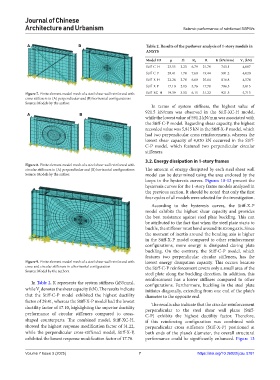
            Figure 7. Finite element model mesh of a steel shear wall reinforced with   Stiff-XC-H  19.39  3.53  6.15  31.22  921.5  5,713
            cross stiffeners in (A) perpendicular and (B) horizontal configurations
            Source: Models by the author.
                                                                 In terms of system stiffness, the highest value of
                                                               921.5  kN/mm was observed in the Stiff-XC-H model,
             A                     B
                                                               while the lowest value of 591.2 kN/mm was associated with
                                                               the Stiff-C-P model. Regarding shear capacity, the highest
                                                               recorded value was 5,815 kN in the Stiff-X-P model, which
                                                               had two perpendicular cross reinforcements, whereas the
                                                               lowest shear capacity of 4,020  kN occurred in the Stiff-
                                                               C-P model, which featured two perpendicular circular
                                                               stiffeners.
                                                               3.2. Energy dissipation in 1-story frames
            Figure 8. Finite element model mesh of a steel shear wall reinforced with
            circular stiffeners in (A) perpendicular and (B) horizontal configurations  The amount of energy dissipated by each steel shear wall
            Source: Models by the author.                      model can be determined using the area enclosed by the
                                                               loops in the hysteresis curves. Figures 10-12 present the
                                                               hysteresis curves for the 1-story frame models analyzed in
                                                               the previous section. It should be noted that only the first
                                                               four cycles of all models were selected for the investigation.
                                                                 According to the hysteresis curves, the Stiff-X-P
                                                               model exhibits the highest shear capacity and provides
                                                               the best resistance against steel plate buckling. This can
                                                               be attributed to the fact that when the steel plate starts to
                                                               buckle, the stiffener must bend around its strong axis. Since
                                                               the moment of inertia around the bending axis is higher
                                                               in the Stiff-X-P model compared to other reinforcement
                                                               configurations, more energy is dissipated during plate
                                                               buckling. On the contrary, the Stiff-C-P model, which
                                                               features  two perpendicular circular stiffeners, has the
            Figure 9. Finite element model mesh of a steel shear wall reinforced with   lowest energy dissipation capacity. This occurs because
            cross and circular stiffeners in a horizontal configuration  the Stiff-C-P reinforcement covers only a small area of the
            Source: Model by the authors.
                                                               steel plate along the buckling direction. In addition, this
                                                               reinforcement has a lower stiffness compared to other
              In Table 2, K represents the system stiffness (kN/mm),   configurations. Furthermore, buckling in the steel plate
            while V  denotes the shear capacity (kN). The results indicate   initiates diagonally, extending from one end of the plate’s
                  y
            that  the  Stiff-C-P  model  exhibited  the  highest  ductility   diameter to the opposite end.
            factor of 29.41, whereas the Stiff-X-P model had the lowest   The results also indicate that the circular reinforcement
            ductility factor of 17.10, highlighting the superior ductility   perpendicular  to  the  steel  shear  wall  plane  (Stiff-
            performance of circular stiffeners compared to cross-  C-P) exhibits the highest ductility factor. Therefore,
            shaped counterparts. The combined model, Stiff-XC-H,   if  this  reinforcing  configuration  was  combined with
            showed the highest response modification factor of 31.22,   perpendicular cross stiffeners (Stiff-X-P) positioned at
            while the perpendicular cross-stiffened model, Stiff-X-P,   both ends of the plane’s diameter, the overall structural
            exhibited the lowest response modification factor of 17.70.  performance could be significantly enhanced. Figure 13


            Volume 7 Issue 3 (2025)                         7                        https://doi.org/10.36922/jcau.5781

