


Page 11 - JCBP-1-2
P. 11
Journal of Clinical and
            Basic Psychosomatics                                                       Melatonin for dementia therapy


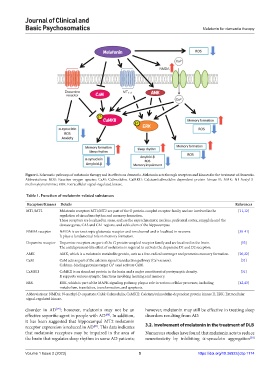
            Figure 1. Schematic pathways of melatonin therapy and its effects on dementia. Melatonin acts through receptors and kinases for the treatment of dementia.
            Abbreviations: ROS: Reactive oxygen species; CaM: Calmodulin; CaMKII: Calcium/calmodulin-dependent protein kinase II; AMK: N1-Acetyl-5-
            methoxykynuramine; ERK: Extracellular signal-regulated kinase.

            Table 1. Function of melatonin‑related substances

             Receptors/Kinases  Details                                                              References
            MT1/MT2       Melatonin receptors MT1/MT2 are part of the G protein-coupled receptor family and are involved in the   [11,12]
                          regulation of circadian rhythm and memory formation.
                          These receptors are localized in areas, such as the suprachiasmatic nucleus, prefrontal cortex, amygdala and the
                          dentate gyrus, CA3 and CA1 regions, and subiculum of the hippocampus.
            NMDA receptor  NMDA is an ionotropic glutamate receptor and ion channel and is localized in neurons.  [38-41]
                          It plays a fundamental role in memory formation.
            Dopamine receptor  Dopamine receptors are part of the G protein-coupled receptor family and are localized in the brain.  [53]
                          The antidepressant-like effect of melatonin is required to activate the dopamine D1 and D2 receptors.
            AMK           AMK, which is a melatonin metabolite protein, acts as a free-radical scavenger and promotes memory formation.  [20,22]
            CaM           CaM acts as part of the calcium signal transduction pathway (Ca +sensor).    [31]
                                                                    2
                          Calcium-binding proteins target Ca +and activate CaM.
                                                 2
            CaMKII        CaMKII is an abundant protein in the brain and a major constituent of postsynaptic density.  [31]
                          It supports various synaptic functions involving learning and memory.
            ERK           ERK, which is part of the MAPK signaling pathway, plays a role in various cellular processes, including   [42,43]
                          metabolism, translation, transformation, and apoptosis.
            Abbreviations: NMDA: N-methyl-D-aspartate; CaM: Calmodulin; CaMKII: Calcium/calmodulin-dependent protein kinase II; ERK: Extracellular
            signal-regulated kinase.

            disorder in AD ; however, melatonin may not be an   however, melatonin may still be effective in treating sleep
                         [79]
            effective soporific agent in people with AD . In addition,   disorders resulting from AD.
                                              [80]
            it has been suggested that hippocampal MT2 melatonin
                                         [81]
            receptor expression is reduced in AD . This data indicates   3.2. Involvement of melatonin in the treatment of DLB
            that melatonin receptors may be impaired in the area of   Numerous studies have found that melatonin acts to reduce
            the brain that regulates sleep rhythm in some AD patients;   neurotoxicity by inhibiting  α-synuclein aggregation
                                                                                                           [38]
            Volume 1 Issue 2 (2023)                         5                        https://doi.org/10.36922/jcbp.1174

