


Page 58 - JCBP-2-2
P. 58
Journal of Clinical and
            Basic Psychosomatics                                              Cultural coping for PTSD among amaXhosa


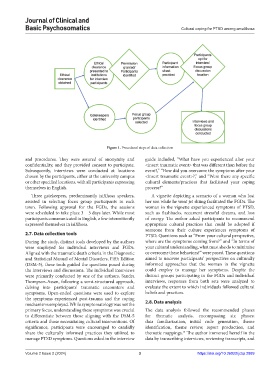
                                              Figure 1. Procedural steps of data collection


            and procedures. They were assured of anonymity and   guide included, “What have you experienced after your
            confidentiality, and they provided consent to participate.   <insert traumatic event> that was different than before the
            Subsequently,  interviews  were  conducted  at  locations   event?,” “How did you overcome the symptoms after your
            chosen by the participants, either at the university campus   <insert traumatic event>?,” and “Were there any specific
            or other specified locations, with all participants expressing   cultural elements/practices that facilitated your coping
            themselves in English.                             process?”
              Three gatekeepers, predominantly isiXhosa speakers,   A vignette depicting a scenario of a woman who lost
            assisted in selecting focus group participants in each   her son while he went jet skiing facilitated the FGDs. The
            town. Following approval for the FGDs, the sessions   woman in the vignette experienced symptoms of PTSD,
            were scheduled to take place 3 – 5 days later. While most   such as flashbacks, recurrent stressful dreams, and loss
            participants communicated in English, a few intermittently   of  energy.  The  author  asked  participants  to  recommend
            expressed themselves in isiXhosa.                  appropriate cultural practices that could be adopted if
                                                               someone from their culture experiences symptoms of
            2.7. Data collection tools                         PTSD. Questions such as “From your cultural perspective,
            During the study, distinct tools developed by the authors   where are the symptoms coming from?” and “In terms of
            were employed for individual interviews and FGDs.   your cultural understanding, what must she do to minimize
            Aligned with the traumatic death criteria in the Diagnostic   or overcome these behaviors?” were posed. These questions
            and Statistical Manual of Mental Disorders, Fifth Edition   aimed to uncover participants’ perspectives on culturally
            (DSM-5), these tools guided the questions posed during   informed approaches that the woman in the vignette
            the interviews and discussions. The individual interviews   could employ to manage her symptoms. Despite the
            were primarily conducted by one of the authors, Sandra   distinct groups participating in the FGDs and individual
            Thompson-Assan, following a semi-structured approach,   interviews, responses from both sets were analyzed to
            delving into participants’ traumatic encounters and   evaluate the extent to which individuals followed cultural
            symptoms. Open-ended questions were used to explore   beliefs and practices.
            the  symptoms experienced post-trauma  and the coping
            mechanisms employed. While symptomatology was not the   2.8. Data analysis
            primary focus, understanding these symptoms was crucial   The data analysis followed the recommended phases
            to differentiate between those aligning with the DSM-5   for  thematic  analysis,  encompassing  six  phases:
            criteria and those necessitating cultural interventions. Of   data familiarization, initial code generation, theme
            significance, participants were encouraged to candidly   identification, theme review, report production, and
            share the culturally informed practices they utilized to   thematic mappings.  The author immersed herself in the
                                                                               14
            manage PTSD symptoms. Questions asked in the interview   data by transcribing interviews, reviewing transcripts, and

            Volume 2 Issue 2 (2024)                         3                        https://doi.org/10.36922/jcbp.2889

