


Page 49 - JCBP-2-4
P. 49
Journal of Clinical and
            Basic Psychosomatics                                            A hackathon of cooperative play over 1000 km


                                                               of the task, such as “something golden or slippery,” were
                                                               suggested. As a result, all the children who watched the
                                                               play suggestions joined the game.

                                                               3.1.12. Werewolf game (11-year-old boy)
                                                               The rules and flow of the game were as follows: in a village,
                                                               werewolves disguised as villagers are eating villagers one by
                                                               one at night. There must be at least three villagers and one
                                                               fortune teller. The victory condition for the village team is to
                                                               kill all the werewolves. Another team has two werewolves,
                                                               and the victory condition is that both teams have the same
                                                               number of werewolves. The person with the most votes at
                                                               noon is eliminated. At night, the werewolves discuss and
                                                               decide who will be eaten. The soothsayer can ask the position
                                                               of a living person. This process is repeated. The chat and
                                                               breakout room of the teleconferencing system were used.
                                                               Only the older children in the upper grades participated.
                                                               3.2. Play ideas presented by parents
                                                               Two games were introduced by two different parents.
                                                               Figure  3 shows the games proposed and the number of
                                                               children participating and actually joining.

                                                               3.2.1. Funny face in stocking
                                                               A parent put a stocking over her head and pulled the
                                                               stocking with the child, showing “a funny face” and
                                                               laughing at each other. A  boy  in  the  upper  grade  was
                                                               amused and tried the same game.
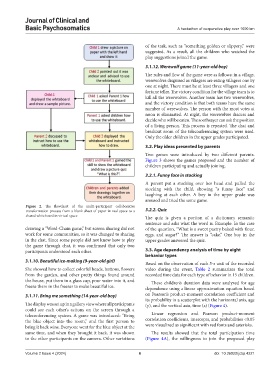
            Figure  2.  The flowchart of the multi-participant collaborative
            transformation process from a blank sheet of paper in real space to a   3.2.2. Quiz
            shared whiteboard in virtual space                 The quiz is given a portion of a dictionary semantic
                                                               sentence and asks what the word is. Example: In the case
            drawing a “Word-Chain game,” but screen sharing did not   of the question, “What is a sweet pastry baked with flour,
            work for some communities, so it was changed to sharing   eggs, and sugar?” The answer is “cake.” One boy in the
            in the chat. Since some people did not know how to play   upper grades answered the quiz.
            the game through chat, it was confirmed that only two
            participants understood each other.                3.3. Age dependency analysis of time by eight
                                                               behavior types
            3.1.10. Beautiful ice-making (9-year-old girl)     Based on the observation of each 5-s unit of the recorded

            She showed how to collect colorful beads, buttons, flowers   video during the event,  Table  2 summarizes the total
            from the garden, and other pretty things found around   recorded time data for each type of behavior in 15 children.
            the house, put them in a glass cup, pour water into it, and   These children’s duration data were analyzed for age
            freeze them in the freezer to make beautiful ice.  dependence using a linear approximation equation based

            3.1.11. Bring me something (14-year-old boy)       on Pearson’s product-moment correlation coefficient and
                                                               its probability in a scatterplot with the horizontal axis, age
            The display was set up in a gallery view where all participants   (y), and the vertical axis, time (s) (Figure 4).
            could  see  each  other’s  actions  on  the  screen  through  a
            teleconferencing system. A game was introduced: “Bring   Linear regression and Pearson product-moment
            the blue object into the room,” and the first person to   correlation coefficients, intercepts, and probabilities <0.05
            bring it back wins. Everyone went for the blue object at the   were visualized as significant with red fonts and asterisks.
            same time, and when they brought it back, it was shown   The results showed that the total participation time
            to the other participants on the camera. Other variations   (Figure  4A),  the willingness  to  join the  proposed play


            Volume 2 Issue 4 (2024)                         6                               doi: 10.36922/jcbp.4221

