


Page 99 - JCBP-3-3
P. 99
Journal of Clinical and
            Basic Psychosomatics                                          Sensitivity, self-esteem, and affective dependence


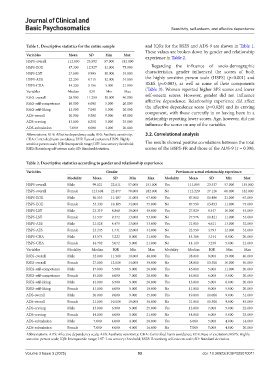
            Table 1. Descriptive statistics for the entire sample  and IQRs for the RSES and ADS-9 are shown in Table 1.
                                                               These values are broken down by gender and relationship
            Variables         Mean     SD     Min     Max      experience in Table 2.
            HSPS-overall      112.050  25.592  57.000  182.000
            HSPS-EOE          47.330  12.527  11.000  75.000     Regarding the influence  of socio-demographic
            HSPS-LST          27.680  9.985  10.000  53.000    characteristics, gender influenced the scores of both
            HSPS-AES          22.250  4.711  12.000  34.000    the highly sensitive person scale (HSPS) (p<0.001) and
            HSPS-CHA          14.220  3.186   5.000  21.000    RSES (p=0.003), as well as some of their components
            Variables         Median   IQR    Min     Max      (Table 3). Women reported higher SPS scores and lower
            RSES-overall      28.000  11.250  10.000  40.000   self-esteem scores. However, gender did not influence
            RSES-self-competence  16.000  6.000  5.000  20.000  affective  dependence.  Relationship  experience  did  affect
                                                               the affective dependence score (p=0.028) and its craving
            RSES-self-liking  12.000  7.000   5.000  20.000
            ADS-overall       20.500  9.500   9.000  45.000    component, with those currently in or having been in a
                                                               relationship reporting lower scores. Age, however, did not
            ADS-craving       13.000  6.250   5.000  25.000    influence the scores on any of the variables.
            ADS-submission     7.000  4.000   4.000  20.000
            Abbreviations: ADS: Affective dependency scale; AES: Aesthetic sensitivity;   3.2. Correlational analysis
            CHA: Controlled harm avoidance; EOE: Ease of excitation; HSPS: Highly
            sensitive person scale; IQR: Interquartile range; LST: Low sensory threshold;   The results showed positive correlations between the total
            RSES: Rosenberg self-esteem scale; SD: Standard deviation.  scores of the HSPS-FR and those of the ADS-9 (r = 0.390,

            Table 2. Descriptive statistics according to gender and relationship experience

            Variables                         Gender                        Previous or actual relationship experience
                              Modality  Mean     SD     Min     Max    Modality  Mean     SD     Min     Max
            HSPS-overall      Male      99.021  22.611  57.000  151.000  Yes     111.805  23.537  57.000  155.000
            HSPS-overall      Female    123.604  22.477  78.000  182.000  No     112.220  27.126  60.000  182.000
            HSPS-EOE          Male      40.553  11.487  11.000  67.000  Yes      47.000  10.486  21.000  67.000
            HSPS-EOE          Female    53.340  10.185  34.000  75.000  No       47.559  13.853  11.000  75.000
            HSPS-LST          Male      23.319   8.866  10.000  40.000  Yes      27.829  9.447  10.000  45.000
            HSPS-LST          Female    31.547   9.372  13.000  53.000  No       27.576  10.421  11.000  53.000
            HSPS-AES          Male      21.128   4.475  13.000  33.000  Yes      21.805  4.611  13.000  32.000
            HSPS-AES          Female    23.245   4.731  12.000  34.000  No       22.559  4.793  12.000  34.000
            HSPS-CHA          Male      13.574   3.222  8.000  21.000  Yes       14.366  3.144   8.000  20.000
            HSPS-CHA          Female    14.792   3.072  5.000  21.000  No        14.119  3.238   5.000  21.000
            Variables         Modality  Median   IQR    Min     Max    Modality  Median   IQR    Min     Max
            RSES-overall      Male      32.000  11.500  10.000  40.000  Yes      28.000  9.000  19.000  40.000
            RSES-overall      Female    27.000  12.000  14.000  39.000  No       28.000  13.500  10.000  40.000
            RSES-self-competence  Male  17.000   5.500  5.000  20.000  Yes       16.000  5.000  11.000  20.000
            RSES-self-competence  Female  15.000  6.000  7.000  20.000  No       16.000  6.000   5.000  20.000
            RSES-self-liking  Male      14.000   6.500  5.000  20.000  Yes       13.000  5.000   6.000  20.000
            RSES-self-liking  Female    11.000   6.000  5.000  19.000  No        11.000  8.000   5.000  20.000
            ADS-overall       Male      20.000   9.000  9.000  45.000  Yes       19.000  10.000  9.000  31.000
            ADS-overall       Female    21.000  10.000  10.000  36.000  No       21.000  10.500  9.000  45.000
            ADS-craving       Male      13.000   6.500  5.000  25.000  Yes       12.000  7.000   5.000  22.000
            ADS-craving       Female    14.000   6.000  5.000  21.000  No        14.000  6.000   5.000  25.000
            ADS-submission    Male       7.000   4.000  4.000  20.000  Yes        6.000  5.000   4.000  14.000
            ADS-submission    Female     7.000   4.000  4.000  16.000  No         7.000  5.000   4.000  20.000
            Abbreviations: ADS: Affective dependency scale; AES: Aesthetic sensitivity; CHA: Controlled harm avoidance; EOE: Ease of excitation; HSPS: Highly
            sensitive person scale; IQR: Interquartile range; LST: Low sensory threshold; RSES: Rosenberg self-esteem scale; SD: Standard deviation.


            Volume 3 Issue 3 (2025)                         93                         doi: 10.36922/JCBP025070011

