


Page 85 - JCTR-10-1
P. 85
Covre et al. | Journal of Clinical and Translational Research 2024; 10(1): 78-84   81
                                                                time, 64.4% felt depressed some time, and 49.2% and 19.7% felt
                                                                exhausted most of the time or all the time, respectively. In this
                                                                scenario, psychotherapy can be a solution, which, in addition to
                                                                being safe, is effective as an alternative form of pharmacological
                                                                treatment  depending on the condition, bringing a range of
                                                                benefits. However, they also have limitations which are worthy of
                                                                discussion. The administration of pharmacological treatment leads
                                                                to more rapid symptom remission but at the risk of adverse side
                                                                effects, whereas psychotherapy requiring weekly follow-up with
                                                                the patients can be conducted in a completely safe manner, with
                                                                therapeutic progress becoming more noticeable over time [17].
                                                                   Another factor related to self-medication is that students who
                                                                did not have a private health plan were the dominant group of
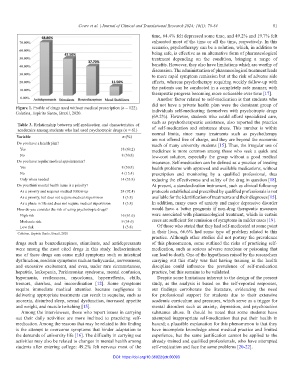
        Figure 1. Profile of drugs used without medical prescription (n = 122).
        Colatina, Espírito Santo, Brazil, 2020.                 individuals self-medicating themselves with psychotropic drugs
                                                                (69.2%).  However,  students  who  could  afford  specialized  care,
                                                                such as psychotherapeutic assistance, also reported the practice
        Table 3. Relationship between self-medication and characteristics of
        academics among students who had used psychotropic drugs (n = 61)   of  self-medication and substance abuse.  This number is within
        Variable                                    n (%)       normal limits, since many treatments such as psychotherapy
                                                                are not offered free of charge, and they are beyond the economic
        Do you have a health plan?                              reach of many university students [15]. Thus, the irregular use of
         Yes                                       18 (69.2)    medicines is more common among those who seek a quick and
         No                                         8 (30.8)    low-cost solution, especially the group without a good medical
        Do you have regular medical appointments?               insurance. Self-medication can be defined as a practice of treating
         Yes                                        8 (30.8)    health problems with approved and available medications, without
         No                                         4 (15.4)    prescription  and  monitoring  by  a  qualified  professional,  thus
         Only when needed                          14 (53.8)    reducing the effectiveness and safety of the drug in question [18].
        Do you think mental health issue is a priority?         At present, a standardization instrument, such as clinical follow-up
         As a priority and requires medical follow-up  24 (92.4)   protocols established and prescribed by qualified professionals is not
         As a priority, but does not require medical supervision  1 (3.8)  available for the identification of treatments and their diagnoses [15].
         As a phase in life and does not require medical supervision  1 (3.8)  In addition, many cases of anxiety and major depressive disorder
        How do you consider the risk of using psychotropic drugs?  would have a better prognosis if non-drug therapeutic measures
         High risk                                 16 (61.6)    were associated with pharmacological treatment, which in certain
         Moderate risk                              9 (34.6)    cases are sufficient for remission of symptoms in milder cases [19].
         Low risk                                   1 (3.8)        Of those who stated that they had self-medicated at some point
        Colatina, Espírito Santo, Brazil, 2020                  in  their  lives,  66.6% had  some type  of problem  related  to  this
                                                                practice. Although  other  studies  did  not  portray  the  prevalence
        drugs such as benzodiazepines,  stimulants,  and antidepressants   of this phenomenon, some outlined the risks of practicing self-
        were among the most cited  drugs in this study. Indiscriminate   medication, such as serious adverse reactions or poisoning that
        use of these drugs can cause mild symptoms such as intestinal   can lead to death. One of the hypotheses raised by the researchers
        dysfunction, medium symptoms such as tachycardia, nervousness,   carrying  out this study was that  having training  in the health
        and excessive excitement,  and even, under rare circumstances,   discipline  could  influence  the  prevalence  of  self-medication
        hepatitis, leukopenia, Parkinsonian syndrome, mental confusion,   practice, but this remains to be validated.
        hypomania,  restlessness,  myoclonus,  hyperreflexia,  chills,   Despite some limitations inherent to the design of the present
        tremors, diarrhea, and incoordination  [12]. Some symptoms   study, as the analysis is based on the self-reported responses,
        require  immediate  medical  attention  because  negligence  in   our  findings  corroborate  the  literature,  evidencing  the  need
        delivering appropriate treatments can result in sequelae, such as   for professional support for students due to their  extensive
        anorexia, disturbed sleep, sexual dysfunction, increased appetite   academic curriculum and pressures, which serve as a trigger for
        and weight, and muscle twitching [15].                  mental  disorders such as anxiety, depression, and psychoactive
          Among the interviewees, those who report issues in carrying   substance abuse. It should be noted that some students have
        out their daily activities  are more inclined  to practicing  self-  attempted  inappropriate  self-medication  that  put their  health  in
        medication. Among the reasons that may be related to this finding   hazard; a plausible explanation for this phenomenon is that they
        is the attempt to overcome symptoms that hinder adaptation to   have incomplete knowledge about medical practice and limited
        the demands of university life [16]. The difficulty in carrying out   experience,  but  the  same  justification  cannot  be  applied  to  the
        activities may also be related to changes in mental health among   already trained and qualified professionals, who have attempted
        students after entering college: 49.2% felt nervous most of the   self-medication and face the same problems [20-22].
                                                DOI: https://doi.org/10.36922/jctr.00093

