


Page 86 - JCTR-10-1
P. 86
82                        Covre et al. | Journal of Clinical and Translational Research 2024; 10(1): 78-84


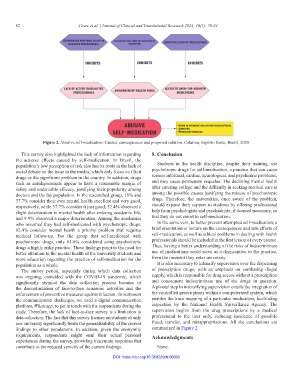
                   Figure 2. Abusive self-medication: Causes, consequences and proposed solution. Colatina, Espírito Santo, Brazil, 2020.

          This survey also highlighted the lack of information regarding   5. Conclusion
        the  adverse  effects  caused  by  self-medication.  In  Brazil,  the
        population’s low perception of risk also has its roots in the lack of   Students in the health discipline, despite their training, use
        social debate on the issue in the media, which only focus on illicit   psychotropic drugs for self-medication, a practice that can cause
        drugs as the significant problem in the country. In addition, drugs   serious intestinal, cardiac, neurological, and psychiatric problems,
        such as antidepressants appear to have a reasonable margin of   and may cause permanent sequelae. The declining mental health
        safety and undeniable efficacy, justifying their popularity among   after entering college and the difficulty in seeking medical care is
        doctors and the lay population. In the researched group, 18% and   among the possible causes justifying the misuse of psychotropic
        37.7% consider their own mental health excellent and very good,   drugs.  Therefore,  the universities,  once aware of the problem,
        respectively, while 37.7% consider it just good; 52.4% observed a   should expand their support to students by offering professional
        slight deterioration in mental health after entering academic life,   help from psychologists and psychiatrists, if deemed necessary, so
        and 9.9% observed a major deterioration. Among the academics   that they do not resort to self-medication.
        who assumed they had self-medicated with psychotropic drugs,   In the same vein, to better prevent attempted self-medication, a
        92.4% consider mental  health  a priority problem that requires   brief orientation or lecture on the consequences and side effects of
        medical  follow-up. For the group that self-medicated  with   self-medication, as well as ethical problems in dealing with health
        psychotropic  drugs, only 61.6% considered  using psychotropic   professionals should be included in the first lesson of every course.
        drugs a highly risky practice. These findings point to the need for   Thus, having a better understanding of the risks of indiscriminate
        better attention to the mental health of the university students and   use of medications could serve as a disincentive to the practice,
        more education regarding the practice of self-medication for the   from the moment they enter university.
        population as a whole.                                     It is also necessary to intensify supervision over the dispensing
          The survey period, especially during which data collection   of prescription drugs, with an emphasis on combating illegal
        was  ongoing,  coincided  with  the COVID-19  pandemic,  which   supply, which is responsible for drug access without a prescription
        significantly  stymied  the  data  collection  process  because  of   and consequent  indiscriminate  use of the  drugs in question.
        the discontinuation of face-to-face academic activities and the   A pivotal step in intensifying supervision entails the integration of
        enforcement of preventive measures against infection. To surmount   the controlled prescriptions within a computerized system, which
        the communication challenges, we used a digital communication   enables the trace mapping of a particular medication, facilitating
        platform, Whatsapp, to get in touch with the respondents during the   inspection by the National  Health Surveillance  Agency.  The
        study. Therefore, the lack of face-to-face survey is a limitation to   supervision  begins  from  the  drug prescriptions  by a medical
        data collection. The fact that this survey focuses on students of only   professional to the user only, reducing incidence  of possible
        one university significantly limits the generalizability of the current   fraud, transfer, and misappropriations.  All the  conclusions  are
        findings  to  other  populations.  In  addition,  given  the  anonymity   summarized in Figure 2.
        requirements, respondents might omit their actual personal   Acknowledgments
        experiences during the survey, providing inaccurate responses that
        contribute to the reduced veracity of the current findings.  None.
                                                DOI: https://doi.org/10.36922/jctr.00093

