


Page 73 - JCTR-10-2
P. 73
Ezenekwe et al. | Journal of Clinical and Translational Research 2024; 10(2): 165-171   167


                    Patients with hyperparathyroidism
                       with 4D-CT imaging
                          n = 144
                                    No parathyroidectomy
                                      or unsuccessful
                                     parathyroidectomy
                                        n = 24
                          n = 120
                                       Unavailable
                                    intraoperative surgical
                                     pathology results
                                         n = 2
                          n = 118
                                       Inaccurate
                                      localization of
                                    parathyroid adenoma
                                        n = 35
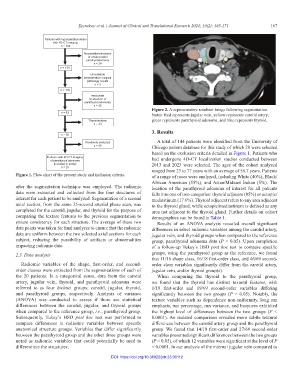
                                                                Figure 2. A representative resultant image following segmentation.
                           n = 83
                                                                Notes: Red represents jugular vein, yellow represents carotid artery,
                                      Thyroidectomy             green represents parathyroid adenoma, and blue represents thyroid.
                                        n = 33
                                                                3. Results
                           n = 50
                                     Randomly excluded             A total of 144 patients were identified from the University of
                                        n = 30                  Chicago patient database for this study of which 20 were selected
                                                                based on the exclusion criteria detailed in Figure 1. Patients who
                     Patients with 4D-CT imaging                had  undergone  4D-CT  localization  studies  conducted  between
                      of parathyroid adenoma
                       (included in study)                      2013 and 2023 were selected. The ages of the cohort analyzed
                           n = 20
                                                                ranged from 23 to 77 years with an average of 56.7 years. Patients
        Figure 1. Flow chart of the present study and inclusion criteria.  of a range of races were analyzed, including White (40%), Black/
                                                                African American  (55%),  and Asian/Mideast  Indian  (5%).  The
        after the segmentation  technique was employed.  The radiomic   location  of the parathyroid  adenoma  of interest  for all  patients
        data were extracted and collected from the four structures of   falls into one of two categories: thyroid adjacent (85%) or ectopic/
        interest for each patient to be analyzed. Segmentation of a second   mediastinum (17.6%). Thyroid adjacent refers to any area adjacent
        axial section, from the same 25-second arterial phase scan, was   to the thyroid gland, while ectopic/mediastinum is defined as any
        completed for the carotid, jugular, and thyroid for the purpose of   area not adjacent to the thyroid gland. Further details on cohort
        comparing  the texture  features to the previous segmentation  to   demographics can be found in Table 1.
        ensure consistency for each structure. The average of these two   Results  of  an  ANOVA  analysis  revealed  overall  significant
        data points was taken for final analyses to ensure that the radiomic   differences in select radiomic variables among the carotid artery,
        data are uniform between the two selected axial sections for each   jugular vein, and thyroid groups when compared to the reference
        subject,  reducing  the  possibility  of  artifacts  or  abnormalities   group, parathyroid adenoma data (P < 0.05). Upon completion
        impacting radiomic data.                                of a follow-up Tukey’s HSD  post hoc  test  to  compare  specific

        2.3. Data analysis                                      groups, using the parathyroid group as the reference, we found
                                                                that 11/16 shape class, 16/18 first-order class, and 46/69 second-
          Radiomic  variables  of  the  shape,  first-order,  and  second-  order class variables significantly differ from the carotid artery,
        order classes were extracted from the segmentations of each of   jugular vein, and/or thyroid group(s).
        the  20  patients.  In  a  categorical  sense,  data  from  the  carotid   When  comparing  the  thyroid  to  the  parathyroid  group,
        artery,  jugular  vein,  thyroid,  and  parathyroid  adenoma  were   we  found  that  the  thyroid  has  distinct  textural  features,  with
        referred  to  as  four  distinct  groups:  carotid,  jugular,  thyroid,   1/18  first-order  and  19/69  second-order  variables  differing
        and  parathyroid  groups,  respectively.  Analysis  of  variance   significantly  between  the  two  groups  (P  <  0.05).  Notably,  the
        (ANOVA)  was  conducted  to  assess  if  there  are  statistical   texture variables such as dependence non-uniformity, long run
        differences  between  the  carotid,  jugular,  and  thyroid  groups   emphasis, run percentage, run variance, and busyness exhibited
        when compared to the reference group, i.e., parathyroid group.   the  highest  level  of  differences  between  the  two  groups  (P <
        Subsequently,  Tukey’s  HSD  post hoc test was performed to   0.0001). An isolated comparison revealed more subtle textural
        compare  differences  in  radiomic  variables  between  specific   differences between the carotid artery group and the parathyroid
        anatomical structure groups. Variables that differ significantly   group. We found that 14/18 first-order and 27/69 second-order
        between the parathyroid group and the other three groups were   variables presented significant differences between the two groups
        noted as radiomic variables that could potentially be used to   (P < 0.05), of which 12 variables were significant at the level of P
        differentiate the structures.                           < 0.0001. In our analysis of the internal jugular vein compared to
                                                DOI: https://doi.org/10.36922/jctr.23.00112

