


Page 22 - JCTR-10-3
P. 22
196                       Shegena et al. | Journal of Clinical and Translational Research 2024; 10(3): 191-200
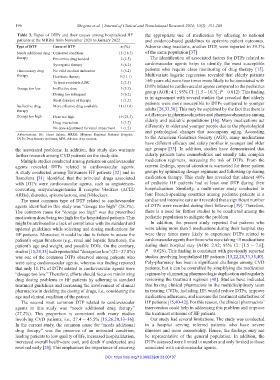
        Table  3. Types of DTPs  and their causes among hospitalized  HF   the appropriate use of medication  by adhering to national
        patients at the MRRH from November 2021 to January 2022  and  evidence-based  guidelines  to  optimize  patient  outcomes.
        Type of DTP    Cause of DTP                 n (%)      Adverse drug reactions, another DTP, were reported in 59.3%
        Needs additional drug  Untreated condition  15 (18.5)  of the same population [37].
        therapy         Preventive drug needed      2 (2.5)      The identification of associated factors for DTPs related to
                        Synergistic therapy         5 (6.2)    cardiovascular  agents  helps  to  identify  the  most  susceptible
        Unnecessary drug   No valid medical indication  5 (6.2)  patients  who  require  close  monitoring  of  drug  therapy  [15].
        therapy         Duplicate therapy           9 (11.1)   Multivariate  logistic  regression revealed  that  elderly  patients
                        To treat avoidable ADR      2 (2.5)    >60 years old were four times more likely to be associated with
        Dosage too low  Ineffective dose            3 (3.7)    DTPs related to cardiovascular agents compared to the pediatrics
                        Dosing too infrequent       5 (6.2)    group (AOR: 4.1; 95% CI: [1.5 – 10.3]; P = 0.012). This finding
                        Short duration of therapy   1 (1.2)    is in agreement with several studies that revealed that elderly
        Ineffective drug   More effective drug available  11 (13.6)  patients were more susceptible to DTPs compared to younger
        therapy                                                adults [28,33,38]. This may be explained by the fact that there is
        Dosage too high  Dose too high              19 (23.5)  a difference in pharmacokinetics and pharmacodynamics among
                        Drug interaction            3 (3.7)    elderly and pediatric populations [16]. Many medications act
                        No dose adjustment for renal impairment  1 (1.2)  differently in older and younger people due to the physiological
        Abbreviations:  HF: Heart  failure;  MRRH: Mbarara  Regional  Referral  Hospital;    and pathological changes that accompany aging.  According
        DTPs: Drug therapy problems; ADR: Adverse drug reaction.  to the American Geriatrics Society (AGS), many medications
                                                               have different efficacy and safety profiles in younger and older
        the associated problems. In addition, this study also warrants   age groups [33].  In  addition,  studies  have  demonstrated  that
        further research among CVD patients on the study site.  elderly patients have comorbidities and usually take complex
          Multiple studies conducted among patients on cardiovascular   medication  regimens, increasing the risk of DTPs. From the
        agents  revealed DTPs related  to  cardiovascular  agents.   current findings, special attention is warranted for these patient
        A study conducted among Taiwanese HF patients [32] and in   groups by optimizing dosage regimens and following up during
        Barcelona  [31]  identified  that  the  principal  drugs  associated   medication therapy. This study has revealed that almost 40%
        with  DTPs  were  cardiovascular  agents,  such  as  angiotensin-  of  pediatric  HF  patients  had  at  least  one  DTP  during  their
        converting  enzyme/angiotensin  II  receptor  blockers  (ACEI/  hospitalization.  Similarly,  a  multi-center  study  conducted  in
        ARBs), diuretics, spironolactone, and β-blockers.      four  French-speaking  countries  among  pediatric  patients  in  a
          The most  common  type of  DTP  related  to  cardiovascular   cardiac and intensive care unit revealed that a significant number
        agents identified in this study was “dosage too high” (28.3%).   of DTPs were recorded during their follow-up [39]. Therefore,
        The common cause for “dosage too high” was the prescribed   there is a need for further studies to be conducted among the
        medication dose being too high for the hospitalized patients. This   pediatric population to mitigate the problem.
        might be attributed to a lack of compliance with the standard and   In  addition,  the  present  study  reported  that  patients  who
        updated guidelines while selecting and dosing medications for   were taking more than 5 medications during their hospital stay
        HF patients. Moreover, it could be due to failure to assess the   were three  times more  likely  to experience  DTPs related  to
        patient’s organ functions (e.g., renal and hepatic functions), the   cardiovascular agents than those who were taking <5 medications
        patient’s age and weight, and possible DDIs. On the contrary,   during  their  hospital  stay  (AOR:  2.92;  95%  CI:  [1.5  –  7.6];
        studies [15,28,33] had reported that “dosage too low” (22 – 27.8%)   P = 0.029). This finding is consistent with previously reported
        was one of the common DTPs observed among patients who   studies involving hospitalized HF patients [15,22,28,33,35,40].
        were using cardiovascular agents, whereas our finding reported   Poly-pharmacy has been a significant challenge among CVD
        that only 11.1% of DTPs related to cardiovascular agents were   patients, but it can be controlled by simplifying the medication
        “dosage too low.” Therefore, efforts should focus on minimizing   regimen by eliminating pharmacologic duplication and regularly
        drug dosing problems in HF patients by adhering to standard   reviewing the treatment regimen [40]. Studies have indicated
        treatment guidelines and increasing the involvement of clinical   that having clinical pharmacists in the multidisciplinary team
        pharmacists in deciding the dosing of drugs, i.e., considering the   in treating CVDs, including HF, would reduce DTPs, improve
        age and clinical condition of the patient.             medication adherence, and increase the treatment satisfaction of
          The second most common  DTP related  to cardiovascular   HF patients [15,40-42]. For this reason, the clinical pharmacists’
        agents  in  this  study was “needs  additional  drug therapy”   intervention could help in addressing this problem and improve
        (27.2%).  This proportion is consistent with many studies   the treatment outcome of HF patients.
        involving CVD patients, i.e., 27.4 – 45.5% [15,26,28,33–36].   Our study had several limitations. The study was conducted
        In the current study, the common cause for “needs additional   in a hospital serving referred patients who have severe
        drug therapy” was the presence of an untreated  condition,   illnesses and more comorbidity. Hence, the findings may not
        leading patients to low quality of life, increased hospitalization,   be  representative  of  the  general  population.  In  addition,  the
        increased overall health-care cost, and death if undetected and   DTPs assessed were limited in number and only limited to those
        resolved early [28]. This emphasizes the importance of ensuring   associated with cardiovascular agents.

                                              DOI: https://doi.org/10.36922/jctr.23.00137

