


Page 12 - JCTR-11-2
P. 12
Journal of Clinical and
            Translational Research                                                        US-mediated drug delivery


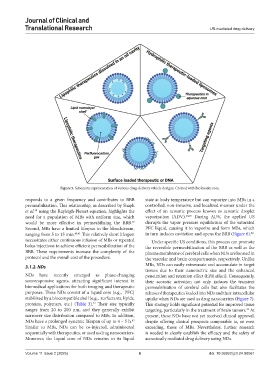
                           Figure 5. Schematic representation of various drug-delivery vehicle designs. Created with BioRender.com.

            responds to a given frequency and contributes to BBB   state at body temperature but can vaporize into MBs in a
            permeabilization. This relationship, as described by Shapk   controlled, non-invasive, and localized manner under the
            et al.  using the Rayleigh-Plesset equation, highlights the   effect of an acoustic process known as acoustic droplet
                38
            need for a population of MBs with uniform size, which   vaporization  (ADV). 44,45   During  ADV,  the  applied  US
            would be more effective in permeabilizing the BBB.    disrupts the vapor pressure equilibrium of the saturated
                                                         39
            Second, MBs have a limited lifespan in the bloodstream,   PFC liquid, causing it to vaporize and form MBs, which
            ranging from 5 to 15 min. 40,41  This relatively short lifespan   in turn induces cavitation and opens the BBB (Figure 6). 46
            necessitates either continuous infusion of MBs or repeated   Under specific US conditions, this process can promote
            bolus injections to achieve efficient permeabilization of the   the reversible permeabilization of the BBB as well as the
            BBB. These requirements increase the complexity of the   plasma membrane of cerebral cells when NDs are located in
            protocol and the overall cost of the procedure.    the vascular and brain compartments, respectively. Unlike
            3.1.2. NDs                                         MBs, NDs can easily extravasate and accumulate in target
                                                               tissues due to their nanometric size and the enhanced
            NDs have recently emerged as phase-changing        penetration and retention effect (EPR effect). Consequently,
            sonoresponsive agents, attracting significant interest in   their  acoustic  activation  not  only  induces  the  transient
            biomedical applications for both imaging and therapeutic   permeabilization  of  cerebral  cells  but  also  facilitates  the
            purposes. These NDs consist of a liquid core (e.g.,  PFC)   release of therapeutics loaded into NDs and their intracellular
            stabilized by a biocompatible shell (e.g.,  surfactants, lipids,   uptake when NDs are used as drug nanocarriers (Figure 7).
            proteins, polymers, etc.) (Table 3).  Their size typically   This strategy holds significant potential for improved tissue
                                         42
            ranges from 20 to 200  nm, and they generally exhibit   targeting, particularly in the treatment of brain tumors.  At
                                                                                                          43
            narrower size distribution compared to MBs. In addition,   present, these NDs have not yet received clinical approval,
            NDs have a prolonged systemic lifespan of up to 4 – 5 h.    despite offering clinical prospects comparable to, or even
                                                         43
            Similar to MBs, NDs can be co-injected, administered   exceeding, those of MBs. Nevertheless, further research
            sequentially with therapeutics, or used as drug nanocarriers.   is needed to clearly establish the efficacy and the safety of
            Moreover, the liquid core of NDs remains in its  liquid   acoustically mediated drug delivery using NDs.


            Volume 11 Issue 2 (2025)                        6                             doi: 10.36922/jctr.24.00061

