


Page 13 - JCTR-11-2
P. 13
Journal of Clinical and
            Translational Research                                                        US-mediated drug delivery


            3.2. Mechanisms of acoustically mediated drug      microenvironment, etc.); (2) The US setup, including the
            delivery                                           type of probe (e.g., mono-element US transducer versus
            The effectiveness of i.c. delivery of therapeutics dependents   transducer array, focused versus  unfocused transducer,
            heavily on: (1) The presence of sufficient amounts of   etc.),  the  device  used  (i.e.,  laboratory-made  device,  US
            sonoresponsive agents (i.e., MBs and NDs) and therapeutics   imaging scanner, clinically approved therapeutic US
            near the biological targets (i.e., BBB and cerebral cells).   device), and the parameters applied (e.g.,  frequency,
            This  is  influenced by their physiochemical properties   acoustic pressure, pulse duration, etc.), which must
            (e.g., size, composition,  etc.) and pharmacological   be optimized to ensure safe and efficient activation of
            characteristics (i.e., pharmacokinetics, pharmacodynamics,   the  sonoresponsive agents near the biological targets;
            bioavailability), as well as their mode of administration (i.e.,   (3)  The  treatment  protocol  including  the  time  interval
            i.v. bolus vs. perfusion, co-administration versus sequential   between the administration of sonoresponsive agents and
            administration) and the physiological state of biological   therapeutics on one hand and the subsequent US exposure
            targets (e.g., healthy versus pathological cells/tissues,   on the other, the number of treatments, and the intervals
                                                               between sessions. 47

                                                               3.2.1. Microbubbles
                                                               As described above, the properties of US and MBs, along
                                                               with in vivo environmental conditions (e.g.,  hydrostatic
                                                               pressure  and dissolved gas  saturation) influence the
                                                               response of MBs to US waves. The high compressibility and
                                                               the low density of the gas core of MBs create a significant
                                                               impedance mismatch with the surrounding medium,
                                                               making MBs highly responsive to US waves. During the
                                                               rarefaction  and  compression  phases  of  the  wave,  MBs
                                                               alternately expand and contract, a phenomenon referred to
                                                               as MB oscillation.  At low acoustic pressures, MBs oscillate
                                                                             40
                                                               in a symmetrical and linear manner, a process known as
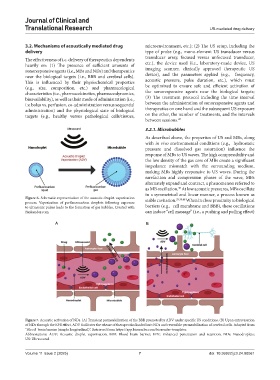
            Figure 6. Schematic representation of the acoustic droplet vaporization   stable cavitation. 25,30,48  When in close proximity to biological
            process. Vaporization of  perfluorocarbon droplets  following  exposure
            to ultrasonic pulses leads to the formation of gas bubbles. Created with   barriers (e.g.,  cell membrane and BBB), these oscillations
            BioRender.com.                                     can induce “cell massage” (i.e., a pushing and pulling effect)

                         A                                     B


            Figure 7. Acoustic activation of NDs. (A) Transient permeabilization of the BBB promoted by ADV under specific US conditions. (B) Upon extravasation
            of NDs through the EPR effect, ADV facilitates the release of therapeutics loaded into NDs and reversible permeabilization of cerebral cells. Adapted from
            “Blood–brain barrier (simple longitudinal)”. Retrieved from https://app.biorender.com/biorender-templates.
            Abbreviations: ADV: Acoustic droplet vaporization; BBB: Blood–brain barrier; EPR: Enhanced penetration and retention; NDs: Nanodroplets;
            US: Ultrasound.


            Volume 11 Issue 2 (2025)                        7                             doi: 10.36922/jctr.24.00061

