


Page 95 - JCTR-11-2
P. 95
Journal of Clinical and
            Translational Research                                        Biomimetic matrix used to treat diabetic foot ulcers


            Table 1. Patients’ characteristics at the enrollment, including prior treatments, duration, wound location, wound depth, and
            comorbidities prior to BMM treatment
            S. no.  Age (years)  Prior treatments  Wound duration (months) Wound location  Wagner classification 14  Comorbidities
            Patient 1  37   A, C, E, HA, LC, O, S, SX, V   39            Heel            2        D, N, OS
            Patient 2  37   A, C, HA, LC, O, S, VS         30           Forefoot         1        N, OS, PVD
            Patient 3  67   E, HA, O                       8             Heel            2        D, N
            Patient 4  58   A, C, E, HA, LC, LCA, O, S, SX, V  56       Forefoot         1        A, D, N, O, OS
            Patient 5  88   C, E, HA, LC, LCA, S, V        3             Ankle           3        D, N, OS, PVD
            Patient 6  69   O, S                           15          Lateral Foot      1        C, D, N, PVD
            Patient 7  70   A, C, E, HA, LC, LCA, O, S     8             Heel            3        D, N, O
            Patient 8  84   C, HA, LCA, O, S               13           Mid-arch         2        C, N
            Notes: Prior treatments: A: Amniotic membrane; C: Collagen-decellularized; E: Enzymatic debridement; H: Hyperbaric oxygen; HA: Hypochlorous
            acid irrigation; LC: Living cell; LCA: Living cell amniotic; O: Off-loading shoe or boot; S: Silver dressing; SX: Surgery; V: Negative pressure wound
            therapy; VS: Vascular surgery. Comorbidities: A: Partial amputation; C: Charcot deformity; D: Diabetes; N: Neuropathy; O: Obesity; OS: Osteomyelitis;
            PVD: Peripheral vascular disease.
            Abbreviation: BMM: Biomimetic matrix.

                                                               area. All measurements were taken following wound
                                                               debridement.
                                                               3. Results

                                                               This study selected a small clinical sample of eight patients
                                                               with stalled chronic diabetic foot wounds. The ulceration
                                                               duration before BMM treatment ranged from 3 up to
                                                               56  months  (average  =  21.5  months).  The  wounds  were
                                                               located on weight-bearing surfaces of the foot, except for
                                                               one venous stasis ulcer located on the ankle in a patient who
                                                               was also diabetic. The wounds in this clinical case series
                                                               consisted of Wagner Grade 3 (n = 2; 25%), Grade 2 (n = 3;
                                                               37.5%), and Grade  1 (n  = 3; 37.5%) ulcers. All wounds
                                                               had previously received standard of care, and, except for
                                                               one patient, wounds had also been previously treated with
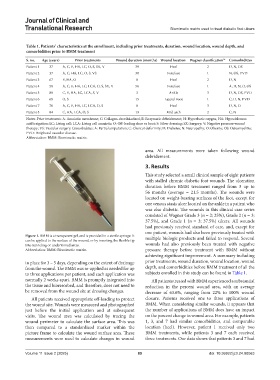
            Figure 1. BMM is a transparent gel, and is provided in a sterile syringe. It   multiple biologic products and failed to respond. Several
            can be applied to the surface of the wound, or by inserting the flexible tip
            into tunneling or undermined areas.                wounds had also previously been treated with negative
            Abbreviation: BMM: Biomimetic matrix.              pressure therapy before treatment with BMM without
                                                               achieving significant improvement. A summary including
            in place for 3 – 5 days, depending on the extent of drainage   prior treatments, wound duration, wound location, wound
            from the wound. The BMM was re-applied as needed for up   depth, and comorbidities before BMM treatment of all the
            to three applications per patient, and each application was   subjects enrolled in this study can be found in Table 1.
            normally 2 weeks apart. BMM is promptly integrated into   All patients treated with BMM experienced a substantial
            the tissue and bioresorbed, and therefore, does not need to   reduction in the percent wound area, with an average
            be removed from the wound site at dressing changes.  decrease of 63.6%, ranging from 22% to 100% wound

              All patients received appropriate off-loading to protect   closure. Patients received one to three applications of
            the wound site. Wounds were measured and photographed   BMM. When considering similar wounds, it appears that
            just before the initial application and at subsequent   the number of applications of BMM does have an impact
            visits. The wound area was calculated by tracing the   on the percent change in wound area. For example, patients
            wound perimeter to calculate the surface area. This was   1,  3,  and 7  had  similar comorbidities,  and  comparable
            then compared to a standardized marker within the   location  (heel).  However,  patient  1  received  only  two
            picture frame to calculate the wound surface area. These   BMM treatments, while patients 3 and 7 each received
            measurements were used to calculate changes in wound   three treatments. Our data shows that patients 3 and 7 had


            Volume 11 Issue 2 (2025)                        89                            doi: 10.36922/jctr.24.00063

