


Page 100 - JCTR-11-3
P. 100
Journal of Clinical and
            Translational Research                                                Household arsenic and bladder cancer


                                                               incubated with iAs for 48 h identified a lower genotoxic
                                                               threshold of 1 μM using the same assay,  though this level
                                                                                              30
                                                               was not observed in our patient cohort. However, iAs also
                                                               exert non-genotoxic effects such as oxidative stress and
                                                               inhibition of DNA repair, 31,32  and the thresholds for these
                                                               effects remain poorly defined in primary urothelial cells.
                                                                 Arsenic was detected in all indoor dust samples, with
                                                               significantly  higher  concentrations  observed  in  UCC
                                                               households compared to controls. In addition, dust arsenic
                                                               levels were positively correlated with urinary arsenic
                                                               species across all patients. This suggests that indoor dust
                                                               may be a relevant source of urinary arsenic exposure in this
                                                               primarily non-smoking population. Arsenic accumulates
                                                               in indoor dust through airborne particulate matter
                                                               originating from sources of outdoor soil and roadway dust
                                                                                                            33
                                                               and may be absorbed through inhalation or unintentional
                                                               ingestion.  Although our study did not find an association
                                                                       34
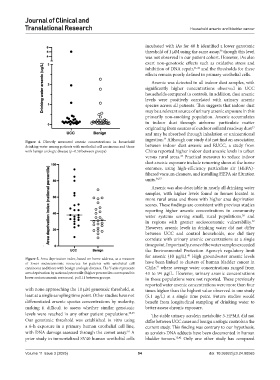
            Figure  4.  Directly measured arsenic concentrations in household
            drinking water among patients with urothelial cell carcinoma and those   between indoor dust arsenic and RUCC, a study from
            with benign urologic disease (p=0.58 between groups)  China reported higher indoor dust arsenic levels in urban
                                                                              35
                                                               versus rural areas.  Practical measures to reduce indoor
                                                               dust arsenic exposure include removing shoes at the home
                                                               entrance,  using  high-efficiency  particulate  air  (HEPA)-
                                                               filtered vacuum cleaners, and installing HEPA air filtration
                                                               units. 36,37
                                                                 Arsenic was also detectable in nearly all drinking water
                                                               samples, with higher levels found in homes located in
                                                               more rural areas and those with higher area deprivation
                                                               scores. These findings are consistent with previous studies
                                                               reporting higher arsenic concentrations in community
                                                               water systems serving small, rural populations,  and
                                                                                                        38
                                                               in regions with greater socioeconomic vulnerability.
                                                                                                            39
                                                               However, arsenic levels in drinking water did not differ
                                                               between UCC and control households, nor did they
                                                               correlate  with  urinary  arsenic  concentrations  at  a  single
                                                               time point. Importantly, none of the water samples exceeded
                                                               the  Environmental  Protection  Agency’s  regulatory  limit
                                                               for arsenic (10  μg/L).  High groundwater arsenic levels
                                                                                 40
            Figure 5. Area deprivation index, based on home address, as a measure
            of lower socioeconomic resources for patients with urothelial cell   have been linked to clusters of human bladder cancer in
                                                                    41
            carcinoma and those with benign urologic diseases. The Y-axis represents   Chile,  where average water concentrations ranged from
            area deprivation by national percentile (higher percentiles correspond to   43 to 94  μg/L. However, urinary arsenic concentrations
            lower socioeconomic resources). p=0.11 between groups.  in those populations were not reported. These previously
                                                               reported water arsenic concentrations were more than four
            with none approaching the 10 μM genotoxic threshold, at   times higher than the highest value observed in our study
            least at a single sampling time point. Other studies have not   (5.1 ug/L) at a single time point. Future studies would
            differentiated arsenic species concentrations by molarity,   benefit from longitudinal sampling of drinking water to
            making it difficult to assess whether similar genotoxic   better assess chronic exposure.
            levels were reached in any other patient populations. 28,29    The stable urinary acrolein metabolite 3-HPMA did not
            Our genotoxic threshold was established  in vitro using   differ between UCC cases and benign urologic controls in the
            a 6-h exposure in a primary human urothelial cell line,   current study. This finding was contrary to our hypothesis,
            with DNA damage assessed through the comet assay.  A   as acrolein-DNA adducts have been documented in human
                                                       18
            prior study in immortalized SV40 human urothelial cells   bladder tumors. 12,42  Only one other study has compared

            Volume 11 Issue 3 (2025)                        94                            doi: 10.36922/jctr.24.00065

