


Page 9 - JCTR-11-3
P. 9
Journal of Clinical and
            Translational Research                                               Lateral patellar instability in deep flexion


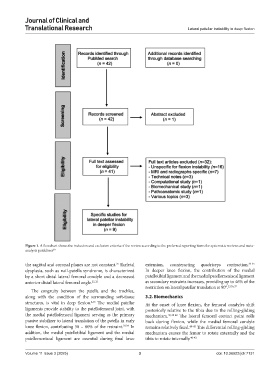
            Figure 1. A flowchart shows the inclusion and exclusion criteria of the review according to the preferred reporting items for systematic reviews and meta-
            analysis guidelines 20


            the sagittal and coronal planes are not constant.  Skeletal   extension,  counteracting  quadriceps  contraction. 33-35
                                                  25
            dysplasia, such as nail-patella syndrome, is characterized   In deeper knee flexion, the contribution of the medial
            by a short distal lateral femoral condyle and a decreased   patellotibial ligament and the medial patellomeniscal ligament
            anterior distal lateral femoral angle. 25,32       as secondary restraints increases, providing up to 46% of the
                                                               restriction on lateral patellar translation at 90°. 33,36,37
              The congruity between the patella and the trochlea,
            along with the condition of the surrounding soft-tissue   3.2. Biomechanics
            structures, is vital in  deep flexion.  The medial patellar   At the onset of knee flexion, the femoral condyles shift
                                        2,15
            ligaments provide stability to the patellofemoral joint, with   posteriorly relative to the tibia due to the rolling-gliding
            the medial patellofemoral ligament serving as the primary   mechanism. 30,38-40  The lateral femoral contact point rolls
            passive stabilizer to lateral translation of the patella in early   back  during  flexion,  while  the  medial  femoral  condyle
            knee flexion, contributing 50 – 60% of the restraint. 33,34  In   remains relatively fixed. 40-42  This differential rolling-gliding
            addition,  the  medial  patellotibial  ligament  and  the  medial   mechanism causes the femur to rotate externally and the
            patellomeniscal ligament are essential during final knee   tibia to rotate internally. 40-42


            Volume 11 Issue 3 (2025)                        3                                doi: 10.36922/jctr.7131

